Turmeric and Curcumin: What the Research Actually Says
Medical Disclaimer
This content is for educational purposes only. It is not medical advice, diagnosis, or treatment. Consult your doctor or registered dietitian before making dietary changes, especially if you have a medical condition or are taking medication.
In This Article
The Golden Spice Under the Microscope
Turmeric is the most studied spice in the world. If you search PubMed for "curcumin," you will find over 19,000 published studies. That is more research than most pharmaceutical drugs receive.
But here is the problem: not all of that research says what the wellness industry claims it says. Some findings are strong. Others are preliminary. And a few popular claims have no solid evidence at all.
This article walks through the real science, study by study, so you can make informed decisions about the turmeric already sitting in your spice box.
What Is Curcumin, Exactly?
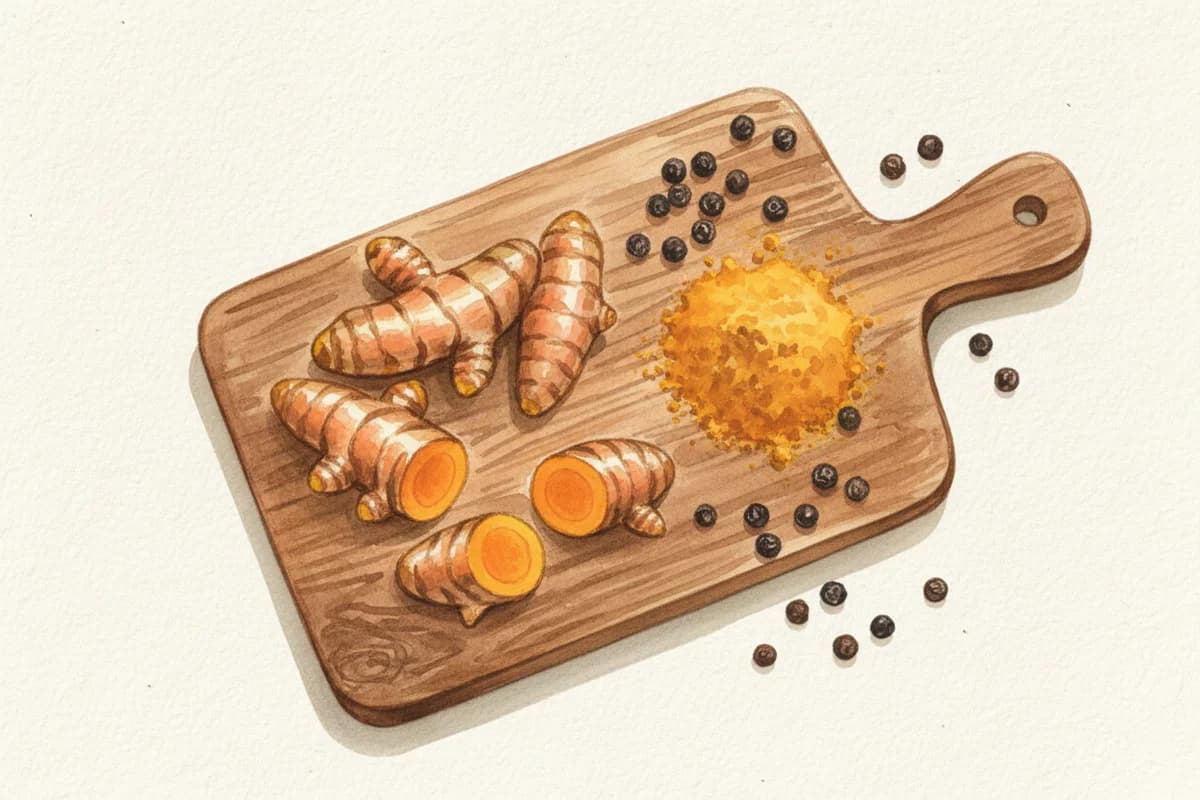
Curcumin is the primary bioactive compound in turmeric (Curcuma longa). It belongs to a group of compounds called curcuminoids, which give turmeric its deep yellow color.
Here is the first thing most people get wrong: turmeric is not the same as curcumin. Turmeric root contains only about 3 percent curcumin by weight. When you add a teaspoon of turmeric to your dal, you are getting roughly 90 to 100 milligrams of curcumin. Most clinical studies use 500 to 2,000 milligrams per day in concentrated extract form [1].
This distinction matters. The benefits demonstrated in lab studies often use curcumin at concentrations you cannot achieve through cooking alone. That does not mean dietary turmeric is useless. It means we need to be honest about the dose.
What the Strong Evidence Supports
Anti-Inflammatory Activity
This is where curcumin research is most convincing. Multiple human trials have shown that curcumin inhibits NF-kB, a molecule that travels into the nuclei of your cells and turns on genes related to inflammation [2].
Chronic, low-grade inflammation plays a role in heart disease, cancer, metabolic syndrome, Alzheimer disease, and various degenerative conditions. Curcumin appears to address this at the molecular level.
The evidence here is rated strong across multiple systematic reviews.
Joint Pain and Arthritis
A 2016 meta-analysis of eight randomized controlled trials found that curcumin extracts (typically 1,000 milligrams per day) significantly improved symptoms in patients with arthritis [4]. Pain scores dropped. Physical function improved. Side effects were minimal compared to NSAIDs.
This is one of the most practical, well-supported uses of curcumin supplementation.
Antioxidant Effects
Curcumin neutralizes free radicals and also stimulates your body's own antioxidant enzymes [1]. This dual mechanism is unusual among dietary antioxidants and has been consistently replicated in both animal and human studies.
What the Moderate Evidence Suggests
Mood and Depression
A randomized, double-blind, placebo-controlled study published in the Journal of Affective Disorders found that 1,000 milligrams of curcumin per day was more effective than placebo in reducing symptoms of major depressive disorder [5]. Some participants also took it alongside their existing medication with additional benefit.
This is promising, but the study sizes are still small. More large-scale trials are needed before curcumin can be recommended as a standalone treatment for depression.
Cognitive Function
An epidemiological study of elderly Asian populations found that those who consumed curry "occasionally" or "often or very often" performed better on cognitive tests than those who "never or rarely" consumed it [7]. This is observational data, not a clinical trial, but it aligns with the anti-inflammatory and antioxidant mechanisms that could protect brain health.
Digestive Health
Turmeric has been used in Ayurvedic medicine for digestive complaints for centuries. Modern research suggests curcumin may help with inflammatory bowel conditions and general gut inflammation, but the clinical trial data is still early stage.
The Bioavailability Problem
Here is the biggest challenge with curcumin: your body does not absorb it well. Curcumin is rapidly metabolized in the liver and intestinal wall, and most of it is excreted before it reaches your bloodstream [6].
Indian cooking has solved this problem for centuries, even if the mechanism was not understood at the time.
Black Pepper (Piperine) Makes It Work
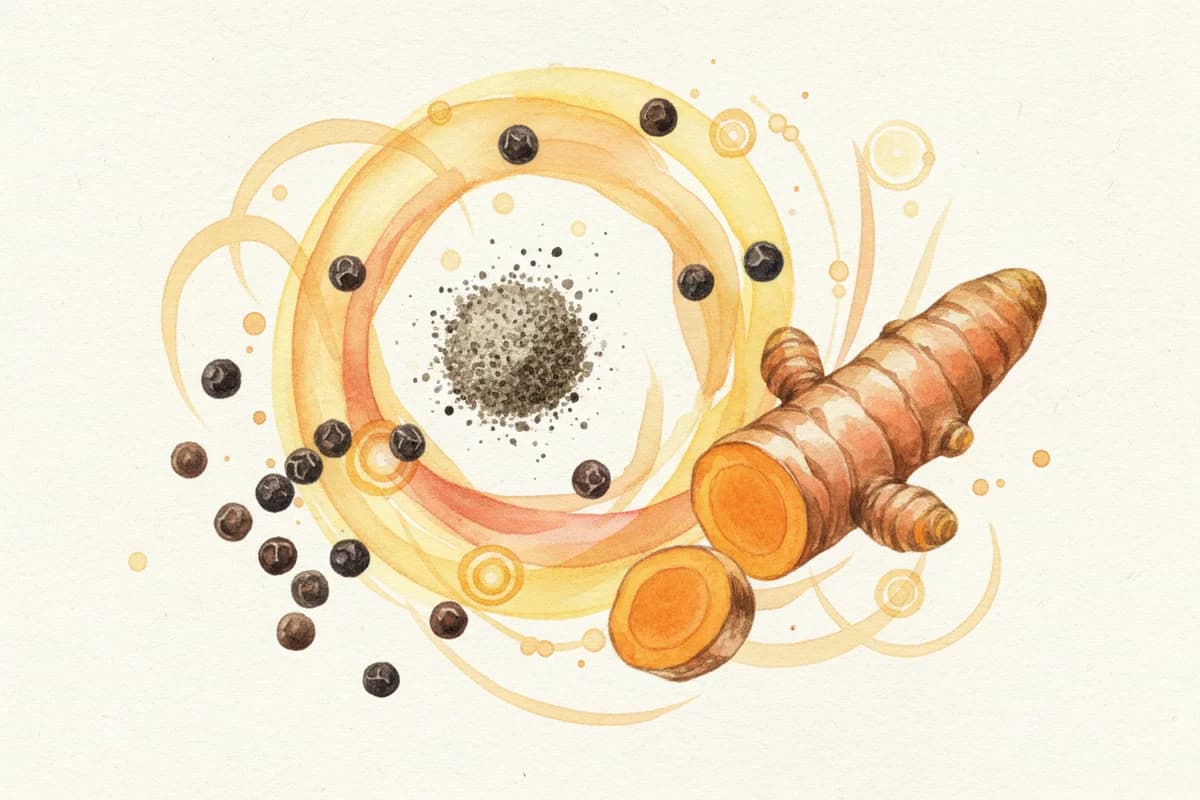
A landmark 1998 study showed that piperine, the active compound in black pepper, increased curcumin bioavailability by 2,000 percent [3]. That is not a typo. Twenty times more curcumin reached the bloodstream when paired with just a small amount of black pepper.
This is why nearly every traditional Indian recipe that uses turmeric also includes black pepper. The pairing is not coincidental. It is centuries of kitchen wisdom validated by modern pharmacology.
Fat Also Helps
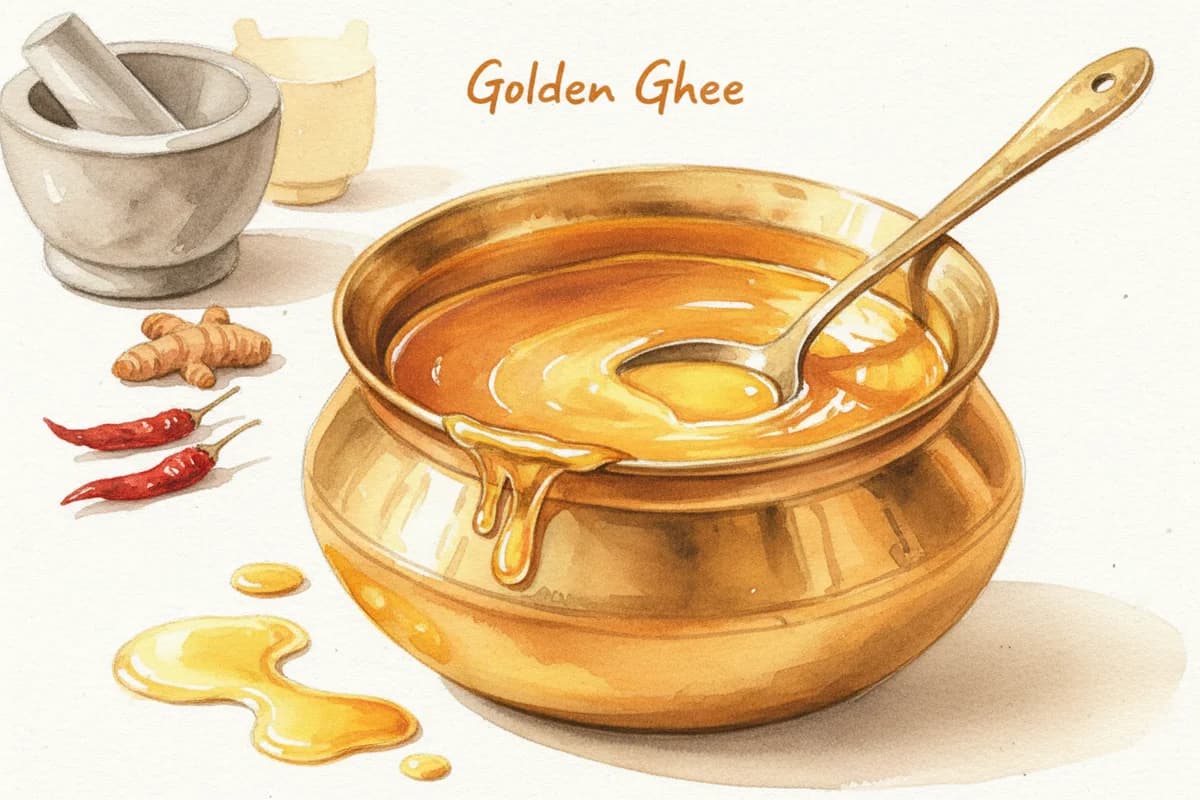
Curcumin is fat-soluble. Cooking turmeric in oil or ghee improves absorption significantly. Again, this is exactly how Indian cooking uses turmeric: bloomed in hot oil or ghee at the start of a dish, often alongside black pepper.
The traditional method of adding turmeric to a tadka (tempering of spices in hot fat) is, from a bioavailability standpoint, the optimal delivery mechanism.
What Does Not Hold Up
"Turmeric Cures Cancer"
Curcumin has shown anti-cancer properties in lab studies (in vitro and animal models). However, no large-scale human clinical trial has demonstrated that turmeric or curcumin prevents or cures cancer. The leap from "it killed cancer cells in a petri dish" to "it cures cancer in humans" is enormous and irresponsible.
Research is ongoing, and curcumin may eventually play a role in cancer prevention or as an adjunct therapy. But that day has not arrived yet.
"A Teaspoon of Turmeric Replaces Medication"
The doses used in clinical studies are far higher than what you get from cooking. A teaspoon of turmeric in your curry provides roughly 90 milligrams of curcumin. Most studies showing benefits use 500 to 2,000 milligrams of concentrated curcumin extract.
Dietary turmeric contributes to your overall anti-inflammatory diet, but it is not a replacement for prescribed medication. Do not stop taking your doctor's prescribed treatments in favor of turmeric.
How to Get the Most from Turmeric in Your Kitchen
You do not need supplements to benefit from turmeric. You do need to use it correctly:
- Always pair turmeric with black pepper. Even a few cracks of fresh pepper dramatically improve absorption.
- Cook it in fat. Add turmeric to hot oil or ghee. This is the traditional tadka method and it works.
- Use it regularly, not occasionally. The anti-inflammatory benefits come from consistent, daily consumption over time.
- Do not overheat it. Prolonged high heat can degrade curcumin. Add turmeric early in the cooking process but avoid charring it.
- Consider golden milk (haldi doodh). Warm milk with turmeric, black pepper, and a small amount of fat is an efficient delivery vehicle.
The Bottom Line
Turmeric is not a miracle cure, and anyone who tells you otherwise is oversimplifying complex science. But it is also not just a pretty yellow color for your dal.
The evidence for curcumin's anti-inflammatory and antioxidant properties is strong. The evidence for joint pain relief is solid. The evidence for mood and cognitive benefits is promising but incomplete.
The most important takeaway is this: Indian cooking already optimizes turmeric absorption through fat, heat, and black pepper. You do not need expensive supplements to get meaningful benefits. You need to cook the way Indian grandmothers have always cooked.
Use turmeric daily. Pair it with black pepper. Cook it in fat. And keep eating your dal.
Sources and References
- [1] Hewlings SJ, Kalman DS. “Curcumin: A Review of Its Effects on Human Health.” Foods, 2017. View source
- [2] Aggarwal BB, Harikumar KB. “Potential therapeutic effects of curcumin, the anti-inflammatory agent, against neurodegenerative, cardiovascular, pulmonary, metabolic, autoimmune and neoplastic diseases.” The International Journal of Biochemistry & Cell Biology, 2009. View source
- [3] Shoba G, Joy D, Joseph T, Majeed M, Rajendran R, Srinivas PS. “Influence of piperine on the pharmacokinetics of curcumin in animals and human volunteers.” Planta Medica, 1998. View source
- [4] Daily JW, Yang M, Park S. “Efficacy of Turmeric Extracts and Curcumin for Alleviating the Symptoms of Joint Arthritis: A Systematic Review and Meta-Analysis.” Journal of Medicinal Food, 2016. View source
- [5] Lopresti AL, Maes M, Maker GL, Hood SD, Drummond PD. “Curcumin for the treatment of major depression: A randomised, double-blind, placebo controlled study.” Journal of Affective Disorders, 2014. View source
- [6] Prasad S, Tyagi AK, Aggarwal BB. “Recent developments in delivery, bioavailability, absorption and metabolism of curcumin: the golden pigment from golden spice.” Cancer Research and Treatment, 2014. View source
- [7] Ng TP, Chiam PC, Lee T, Chua HC, Lim L, Kua EH. “Curry consumption and cognitive function in the elderly.” American Journal of Epidemiology, 2006. View source
Medical Disclaimer
This content is for educational purposes only. It is not medical advice, diagnosis, or treatment. Consult your doctor or registered dietitian before making dietary changes, especially if you have a medical condition or are taking medication.
Related Recipes
More on Nutrition
Get Weekly Nutrition Insights
Evidence-based articles on Indian food and health, delivered to your inbox. No spam, no fads, just science.