The Food Obsessives of India
Every Indian community loves food. Bengalis are obsessed with it. In no other Indian culture is food discussed, debated, poeticized, and philosophized with the same intensity. A Bengali can spend an hour describing the difference between the ilish (hilsa) caught in the Padma river versus the Hooghly river, and consider it time well spent.
This obsession has produced one of India's most sophisticated regional cuisines: a food tradition that follows a strict course order, elevates fish to the level of sacred art, produces the world's finest milk-based sweets, and treats every meal as an opportunity for sensory and intellectual pleasure.
The Geography of Bengali Food
Bengal (West Bengal in India, Bangladesh across the border) is a deltaic floodplain where the Ganges and Brahmaputra rivers meet the Bay of Bengal. This geography gives Bengal:
- Abundant freshwater fish. Rivers, ponds, and flooded paddy fields teem with fish. Ilish (hilsa), rohu, katla, pabda, and chingri (prawns) are staples, not luxuries.
- Rice. Bengal is rice country. The fertile delta produces some of India's finest rice varieties, including Gobindobhog (aromatic, short-grain) and fragrant local varieties.
- Mustard. Mustard grows everywhere in Bengal. Mustard oil, mustard paste, and mustard seeds are the flavor foundation.
- Coconut. More prominent in Bengal than in most of North India.
- A lush vegetable tradition. The wet climate produces abundant greens, gourds, root vegetables, and seasonal produce.
The Course Order
Unlike most Indian meals where everything is served simultaneously, a traditional Bengali meal follows a strict sequence:
- Shukto (bitter course): A mixed vegetable dish featuring bitter gourd and other bitter elements, cooked with a milk or poppy seed paste. Eating bitter first is believed to stimulate digestion and prepare the palate.
- Dal (lentil course): Usually moong dal, sometimes masoor. Simple, light, and comforting.
- Bhaja and chochchori (fried and vegetable course): Begun bhaja (fried eggplant), potol bhaja (fried pointed gourd), or aloo bhaja, alongside a mixed vegetable dish.
- Fish or meat course: The centerpiece. A fish curry (maacher jhol), or for special occasions, a kosha mangsho (slow-cooked goat curry).
- Chutney: Tomato chutney, raw mango chutney, or the famous aam kasundi (mango-mustard chutney). A palate cleanser.
- Mishti (sweet course): Mishti doi, sandesh, rosogolla, or payesh. A meal without sweets is considered incomplete.
The Signature Dishes
Ilish Maach (Hilsa Fish)
The king of Bengali food. Hilsa is an oily, bony river fish with a flavor so distinctive that Bengalis consider it incomparable. It is cooked in dozens of ways:
- Ilish bhapa: Steamed with mustard paste, green chili, and mustard oil in a banana leaf
- Ilish paturi: Similar, wrapped and grilled or steamed
- Ilish maacher jhol: A light curry with turmeric and green chilies
- Ilish bhaja: Simply fried, skin crispy, flesh melting
Kosha Mangsho
Slow-cooked goat curry. "Kosha" means a thick, reduced gravy where the meat has been cooked down with onions, ginger, and whole spices until the oil separates and the gravy clings darkly to each piece. It demands patience. Two hours of slow cooking minimum. The result is one of India's great meat dishes: complex, deeply spiced, and intensely flavorful.
Shorshe Maach (Mustard Fish)
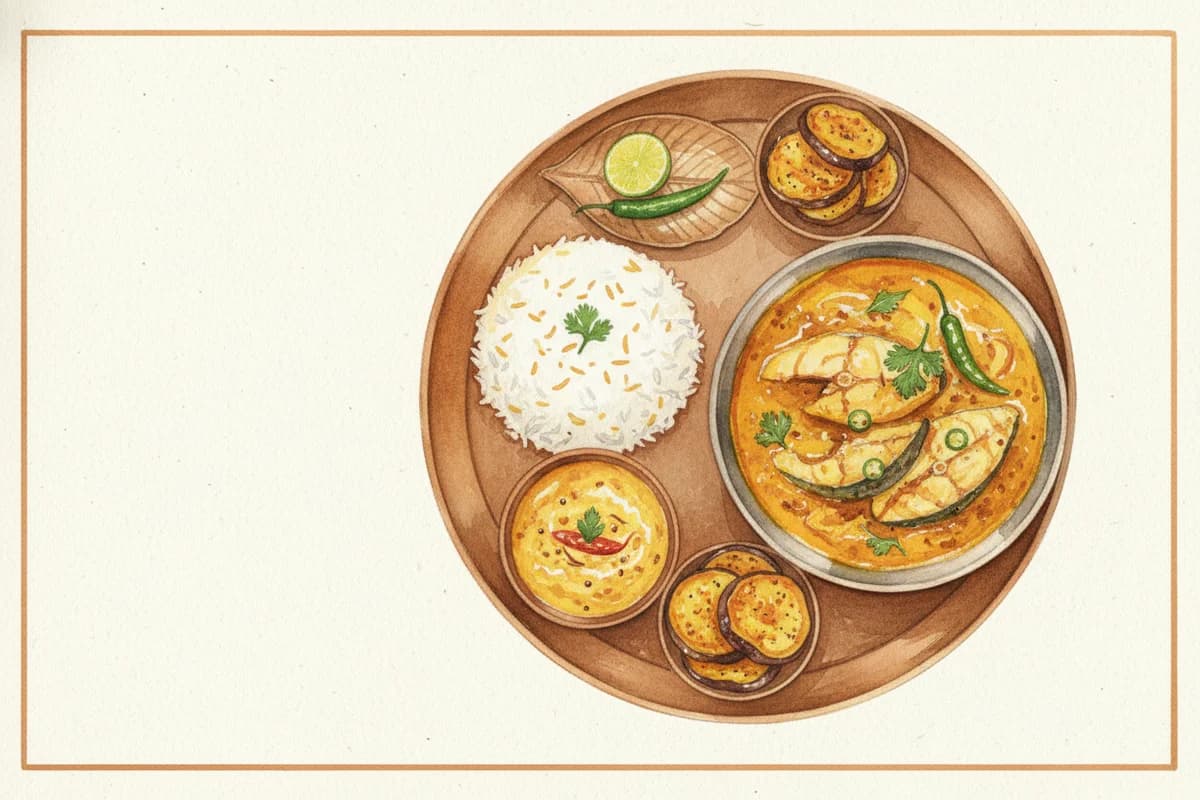
Fish cooked in a sauce of ground mustard seeds, mustard oil, turmeric, and green chilies. The pungent, sharp bite of raw mustard paste mellows slightly with cooking but retains a distinctive tang that is uniquely Bengali. Any river fish works, but rohu and katla are common choices.
Begun Bhaja
Thinly sliced eggplant, dipped in turmeric and salt, and shallow-fried in mustard oil until crispy and golden. So simple that it should not be special. So delicious that it is always the first thing to disappear from the plate.
Cholar Dal
Chana dal cooked with coconut and flavored with whole spices, bay leaf, and ghee. Richer and sweeter than everyday dal, cholar dal is the festive dal of Bengal, served during Durga Puja and weddings.
Mishti Doi
Sweetened yogurt set in clay pots. The clay pot absorbs moisture, concentrating the yogurt, while the jaggery or caramelized sugar gives it a deep amber color and rich sweetness. It is the simplest and most perfect Bengali dessert.
Rosogolla and Sandesh
Bengal is the undisputed capital of milk-based sweets. Rosogolla (spongy chenna balls in sugar syrup) and sandesh (pressed, flavored chenna) are the two pillars. The quality of these sweets in Kolkata, from shops like KC Das, Balaram Mullick, and Nahoum, is unmatched anywhere in the world.
The Mustard Oil Factor
Mustard oil is to Bengali cooking what olive oil is to Italian. It is the foundational fat, used for cooking, tempering, and as a raw condiment. Its sharp, pungent flavor when raw mellows to a warm, slightly spicy character when heated.
In Bengali fish preparations, mustard oil is non-negotiable. The combination of mustard oil, mustard paste, and fresh fish is the most iconic flavor profile in Bengali cuisine. Substituting with any other oil fundamentally changes the dish.
The Panch Phoran
Bengal's signature spice blend is not ground like garam masala. It is a mixture of five whole seeds in equal parts:
- Cumin (jeera)
- Fennel (saunf)
- Fenugreek (methi)
- Nigella (kalonji)
- Mustard (rai)
The Poppy Seed Tradition
Bengal uses white poppy seeds (posto) more than any other Indian cuisine. Poppy seeds are ground to a paste (posto bata) and used in:
- Aloo posto: Potatoes cooked with poppy seed paste. Simple, creamy, and beloved.
- Chingri maacher posto: Prawns in poppy seed gravy.
- Posto bora: Poppy seed fritters.
Bengali Food and the Seasons
Bengali cooking is deeply seasonal. The cuisine follows the rhythm of what the land and rivers provide:
- Summer (Grishma): Raw mango chutneys, cooling sharbats, light fish curries, and aam (mango) in every possible form.
- Monsoon (Barsha): Ilish season. The monsoon hilsa, fatty and flavorful from their upstream migration, is the most prized. Khichuri (khichdi) eaten on rainy days is a monsoon ritual.
- Autumn (Sharat/Hemanta): Durga Puja and the festival feasting season. Kosha mangsho, luchi (deep-fried bread), cholar dal, payesh.
- Winter (Sheet): Nolen gur (date palm jaggery) transforms sweets. Nolen gurer sandesh, payesh, and rosogolla are winter-only delicacies that are worth planning a Kolkata trip around.
The Bottom Line
Bengali cuisine is the most intellectually engaged food tradition in India. It is not just about eating. It is about understanding the progression from bitter to sweet, the precise moment when mustard oil reaches the right temperature, the difference between this year's hilsa and last year's, and why the sandesh from one shop is superior to the one across the street.
For the adventurous eater, Bengali food offers flavors you will not find anywhere else in Indian cuisine: the pungent bite of raw mustard, the bitter elegance of shukto, the melting richness of slow-cooked goat, and the sublime simplicity of mishti doi in a clay pot.
Explore our Bengali recipes to start cooking, and understand that with Bengali food, the conversation about the meal is almost as important as the meal itself.