The Short Answer
Masala is the Hindi and Urdu word for a mixture of spices. It can refer to a dry powder blend, a wet paste, or even the spiced sauce base of a curry. When someone says "add the masala," they might mean a teaspoon of pre-mixed garam masala, a freshly ground paste of ginger and garlic, or the onion-tomato-spice base you have been cooking for 20 minutes.
The word is flexible because Indian cooking treats spice blending as a living, adaptive practice, not a fixed recipe.
The Masala Dabba: Command Center of the Indian Kitchen
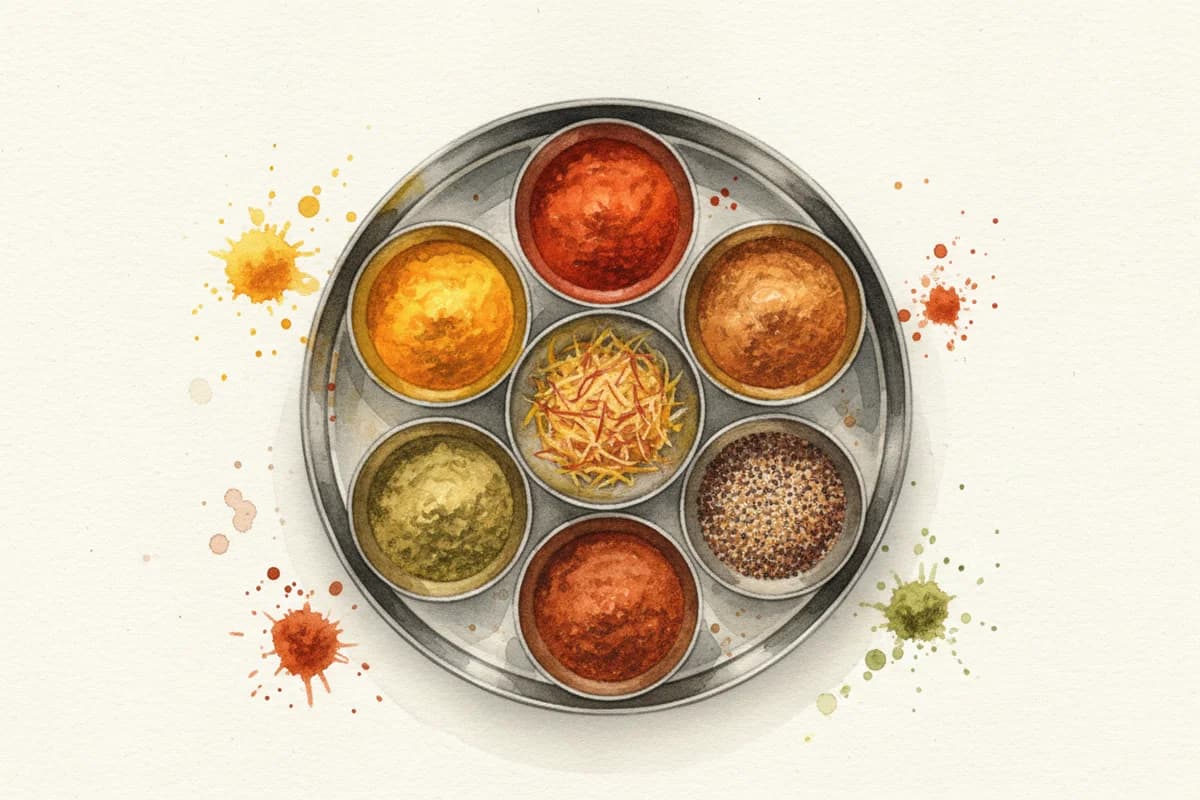
Almost every Indian kitchen contains a masala dabba, a round stainless steel spice box with 7 small compartments and a tight-fitting lid. The standard North Indian dabba typically holds:
- Turmeric (haldi) for color and anti-inflammatory properties
- Red chili powder for heat
- Coriander powder (dhania) for earthy warmth
- Cumin (jeera) for the base note of most Indian cooking
- Garam masala for aromatic finishing
- Mustard seeds (rai) for tadka
- Asafoetida (hing) for umami depth
The masala dabba is the most efficient spice storage system ever designed. Everything you need for daily cooking is in one container, at arm's reach from the stove. Learn more about stocking your spice collection in our guide to building an Indian pantry.
The Major Masalas
Garam Masala
The most famous Indian spice blend worldwide. "Garam" means "warm" (referring to the warming effect on the body, not chili heat). A typical garam masala includes:
- Cinnamon (dalchini)
- Green cardamom (elaichi)
- Cloves (laung)
- Black pepper (kali mirch)
- Bay leaf (tej patta)
- Cumin (jeera)
- Coriander (dhania)
Chaat Masala
A tangy, funky blend used to season street food, salads, and fruits. Contains:
- Amchur (dried mango powder) for sourness
- Black salt (kala namak) for a sulfurous, egg-like umami
- Cumin
- Coriander
- Red chili
- Dried ginger
Sambar Powder
A South Indian blend specifically for sambar (lentil-vegetable stew). Typically includes roasted and ground:
- Toor dal (small amount, for body)
- Dried red chilies
- Coriander seeds
- Cumin
- Fenugreek seeds
- Black pepper
- Turmeric
- Asafoetida
Curry Powder
Here is an important distinction: curry powder is a British invention, not an Indian one. It was created in the 18th century to approximate the flavors of Indian food for the British market. Most Indian cooks do not use a single, generic "curry powder." Instead, they build spice combinations fresh for each dish.
That said, there is nothing wrong with curry powder. It is a reasonable shortcut for quick meals. It just represents a simplified version of what Indian cooking actually does.
Other Notable Masalas
- Pav bhaji masala: A specific blend for Mumbai's famous street food
- Biryani masala: Aromatic, heavy on cardamom and mace
- Tandoori masala: Includes Kashmiri chili for color and smoky notes
- Rasam powder: South Indian blend for the peppery soup-like rasam
- Panch phoran: Bengali five-spice mix of whole seeds (cumin, fennel, fenugreek, nigella, mustard)
How Indian Cooks Think About Spices
The biggest difference between Indian and Western spice use is not the specific spices. It is the approach.
Western cooking typically adds dried herbs and spices as seasoning to a dish that is already being cooked. Indian cooking builds flavor in layers:- Whole spices in hot fat (tadka / tempering), blooming their essential oils
- Wet aromatics (onion, ginger, garlic) cooked until deeply caramelized
- Ground spices added to the wet base, cooked until the oil separates (this is called "masala being done")
- Finishing spices (garam masala, kasuri methi) added at the end for aroma
Whole Spices vs. Ground Spices
Indian cooking uses both, but for different purposes:
Whole spices are used for infusion. Cinnamon sticks, cardamom pods, cloves, and bay leaves are added to hot fat or simmering liquid to release their oils slowly. They are not meant to be eaten (though biting into a cardamom pod in your biryani is a pleasant surprise). Ground spices are used for body and color. Turmeric, chili powder, coriander powder, and cumin powder integrate into the sauce and provide consistent flavor throughout.For details on choosing between fresh and dried, see our guide on fresh vs. dried spices.
The Bottom Line
Masala is not a single product. It is a philosophy: that the right combination of spices, applied at the right time, in the right way, can transform simple ingredients into something extraordinary. Indian cooks have been practicing this philosophy for millennia, and the results speak for themselves.
Start with a masala dabba and the 15 essential spices every Indian kitchen needs. Learn the basic tempering technique. And understand that mastering Indian spice blending is not about memorizing recipes. It is about developing an intuition for which flavors work together and when to add them.
That intuition comes with practice. And every meal you cook brings you closer.