The Three-Tier Approach
Building an Indian pantry can feel overwhelming when you see recipes calling for 15 ingredients you do not recognize. The secret is that Indian cooking follows patterns, and the same 10 to 15 ingredients appear across hundreds of dishes.
We have organized this into three tiers:
- Tier 1 (The Essentials): Buy these first. You can cook 80 percent of Indian dishes with just these.
- Tier 2 (The Expansion): Buy these as you cook more. They open up regional cuisines and specialty dishes.
- Tier 3 (The Deep Cuts): For specific recipes and regional cooking. Buy as needed.
Tier 1: The 10 Essentials
Buy these on your first shopping trip. Total cost: approximately $25 to $40.
1. Cumin Seeds (Jeera)
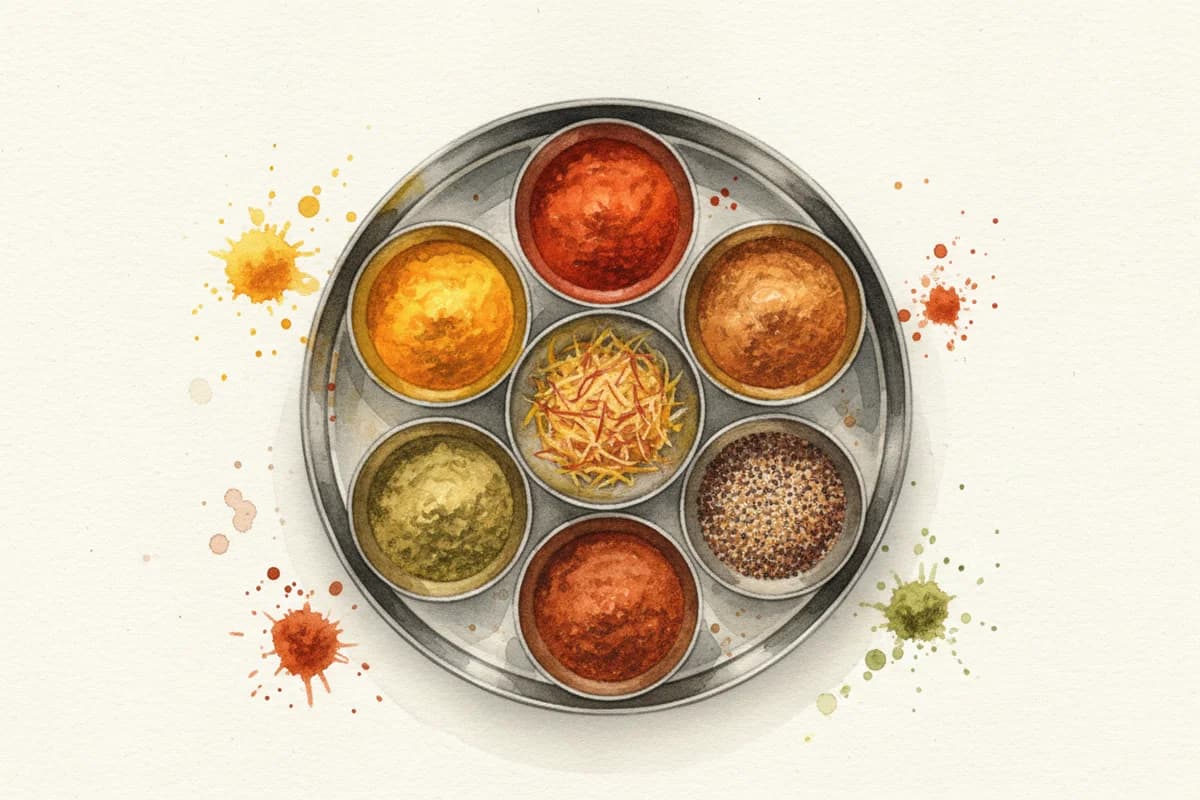
The most used spice in Indian cooking. Used whole in tadka and ground in curry bases. Buy whole seeds and grind as needed for ground cumin.2. Turmeric Powder (Haldi)
Goes in virtually every Indian dish. Provides the golden color and anti-inflammatory curcumin. Buy a small container; a little goes a long way.3. Red Chili Powder (Lal Mirch)
For heat. Start with Kashmiri chili powder, which provides beautiful red color with moderate heat. You can always add more; you cannot remove it.4. Coriander Powder (Dhania)
The workhorse ground spice. Adds warmth and body to every curry. Used in larger quantities than most spices. Buy a bigger container.5. Garam Masala
The finishing spice blend. Added at the end of cooking for aroma. Buy a reputable brand (MDH, Everest) or make your own.6. Ghee or Cooking Oil
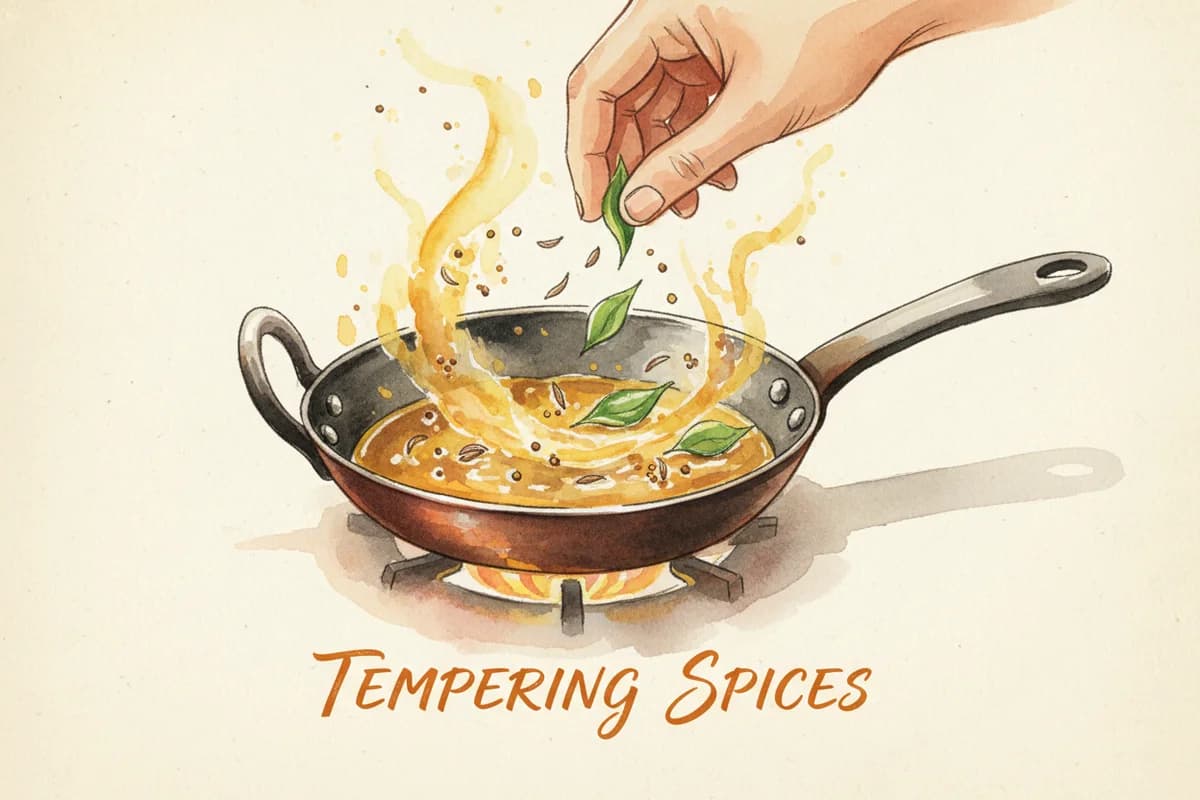
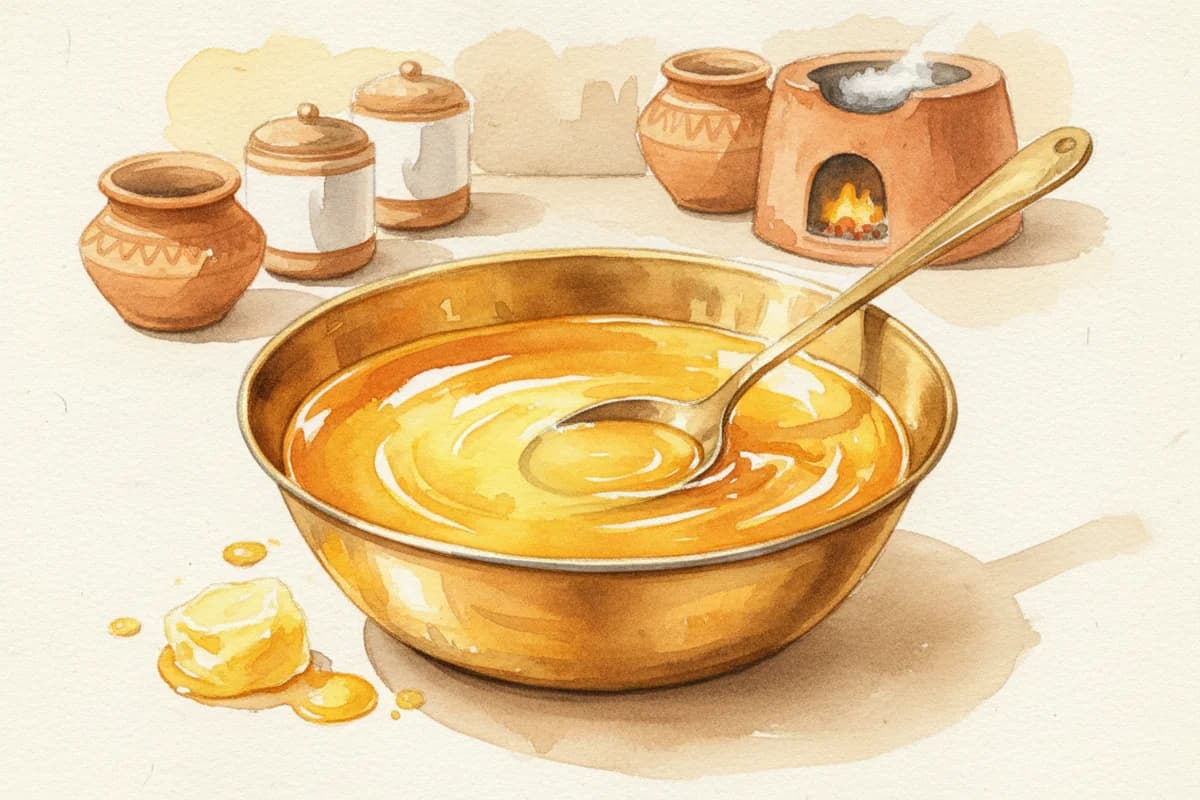
Ghee for authenticity and flavor. Any neutral oil (vegetable, canola, sunflower) works as an alternative. You need fat for tadka and sauteing.7. Onions, Ginger, Garlic
The fresh aromatic trinity. Every North Indian curry starts with these. Buy fresh. Ginger-garlic paste (homemade or store-bought) is a time-saving alternative.8. Canned or Dried Lentils
Toor dal or masoor dal (red lentils) for your first dal. Red lentils cook fastest (15 to 20 minutes) and are widely available. See our guide to lentils.9. Basmati Rice
Long-grain aromatic rice. Even a basic basmati from the supermarket is better than other rice varieties for Indian food. See our basmati vs. jasmine comparison.10. Canned Tomatoes or Tomato Puree
The base of most North Indian gravies. Canned diced tomatoes or passata work perfectly and are more convenient than fresh for curries. With just these 10 items, you can make: dal tadka, jeera rice, basic chicken curry, aloo (potato) curry, chana masala (with canned chickpeas), egg curry, and simple sabzis.Tier 2: The Expansion (15 More Items)
Buy these over your next few shopping trips as you cook more recipes.
Whole Spices for Tadka
- Mustard seeds (essential for South Indian cooking)
- Dried whole red chilies (for tadka heat)
- Curry leaves (find fresh at Indian stores; freeze extras)
Ground Spices
- Asafoetida (hing) Tiny amount adds huge umami. Essential for dal.
- Black pepper (whole, grind fresh; boosts nutrient absorption)
Aromatics for Biryani and Curries
- Cinnamon sticks
- Green cardamom pods
- Whole cloves
- Bay leaves
Pantry Staples
- Chickpeas (canned or dried, for chole)
- Coconut milk (canned, for South Indian and Kerala dishes)
- Yogurt (for raita, marinades, and kadhi)
- Tamarind paste (for South Indian dishes, chutneys)
Fresh Additions
- Green chilies (adjust heat to your preference)
- Fresh cilantro (garnish for everything)
Tier 3: The Deep Cuts
Buy these for specific recipes or when exploring regional cuisines.
- Kasuri methi (dried fenugreek leaves; finishing herb for butter chicken, dal makhani)
- Amchur (dried mango powder; tanginess for chaat and chole)
- Fenugreek seeds (blood sugar benefits, used in pickles and some tadkas)
- Black salt (kala namak) (sulfurous, essential for chaat masala)
- Mustard oil (essential for Bengali cooking, pickles)
- Jaggery or palm sugar (for Gujarati dishes, some chutneys)
- Besan (chickpea flour) (for pakoras, dhokla, kadhi)
- Paneer (fresh cheese; buy or make your own)
- Poppy seeds (khus khus) (for Bengali and Mughlai gravies)
- Saffron (for biryani and special occasions; expensive but a tiny amount goes far)
Storage Guide
Whole Spices (2-3 Year Shelf Life)
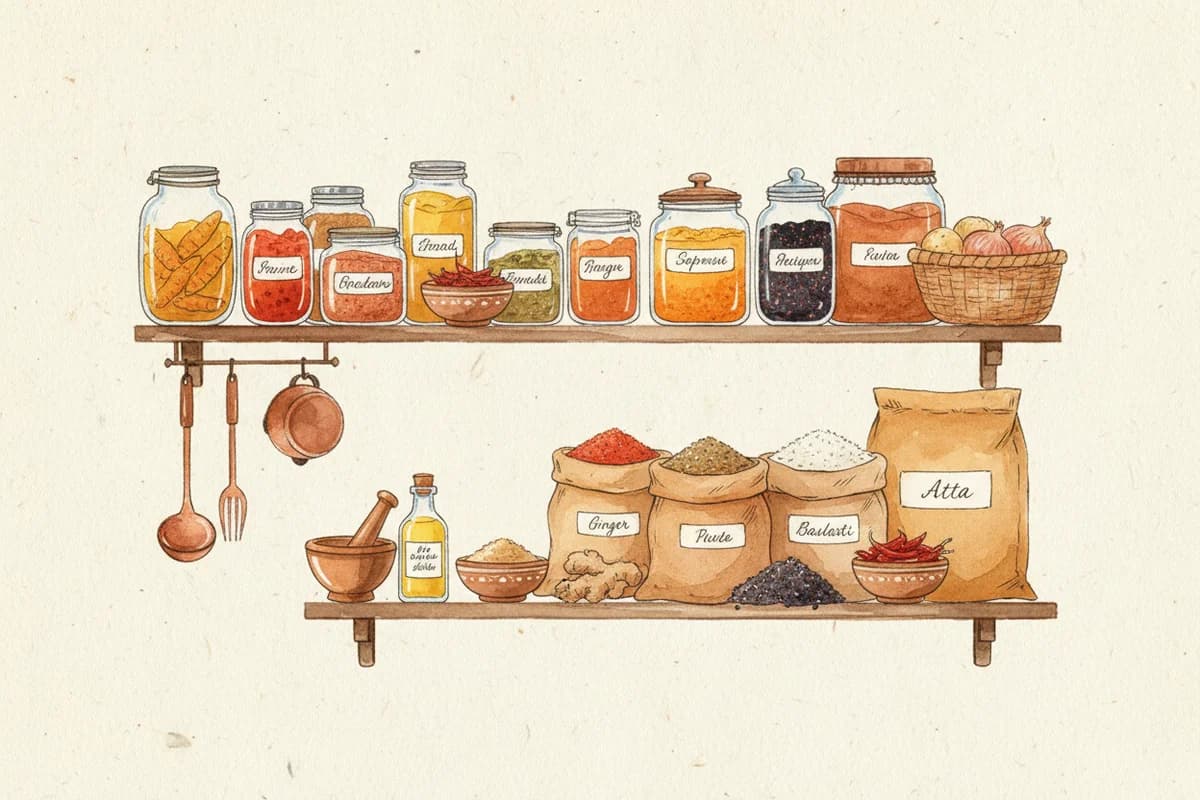
Store in airtight containers (glass jars ideal) in a cool, dark place. Away from the stove, despite the convenience. Heat degrades spices faster than anything else.Ground Spices (6-12 Month Shelf Life)
Same storage rules, but replace more frequently. If a ground spice has no aroma when you open the jar, it is past its useful life. Pro tip: Buy whole spices and grind as needed for the best flavor. A $15 electric spice or coffee grinder pays for itself immediately.Lentils and Dried Beans (1-2 Year Shelf Life)
Store in airtight containers. They last a very long time but cook faster when relatively fresh.Fresh Ingredients
- Ginger: Refrigerator, unwrapped, 2 to 3 weeks. Or freeze whole and grate directly from frozen.
- Garlic: Room temperature in a dry, ventilated spot. 3 to 4 weeks.
- Curry leaves: Wrap in paper towel, airtight container in fridge for 1 week. Or freeze flat in a ziplock bag for months.
- Cilantro: Trim stems, stand in water in the fridge. 5 to 7 days.
Where to Shop
Indian grocery stores offer the best prices and selection. A $30 trip to an Indian store stocks your pantry more thoroughly than $60 at a regular supermarket. Regular supermarkets now stock most Tier 1 items. Check the international or ethnic foods aisle. Online (Amazon, Indian grocery websites) for convenience, especially for less common items. Bulk stores for lentils, rice, and basic spices at lower per-unit costs.The First Five Meals to Cook
Once you have Tier 1 stocked, cook these in order:
- Simple dal tadka. Masoor dal + cumin tadka in ghee. The foundation.
- Jeera rice. Basmati rice + cumin + ghee. Pairs with everything.
- Aloo sabzi. Potatoes + cumin + turmeric + chili. A 15-minute side dish.
- Chana masala. Canned chickpeas + onion-tomato masala. A complete meal.
- Egg curry. Hard-boiled eggs in a simple onion-tomato gravy. Protein-rich and quick.
The Bottom Line
An Indian pantry is not built in a day, and it does not need to be. Start with the 10 essentials, cook a few basic dishes, and expand as your confidence grows. Within a month, you will have a well-stocked kitchen that can produce dozens of different Indian meals.
The total investment for a complete Tier 1 + Tier 2 pantry is approximately $50 to $75. That is enough to cook Indian food confidently for months. Compare that to the cost of a few takeout orders, and the value is clear.
Start small. Cook often. Let your pantry grow with your skills.