The Quick Comparison
| Property | Basmati | Jasmine |
|---|---|---|
| Origin | India / Pakistan | Thailand |
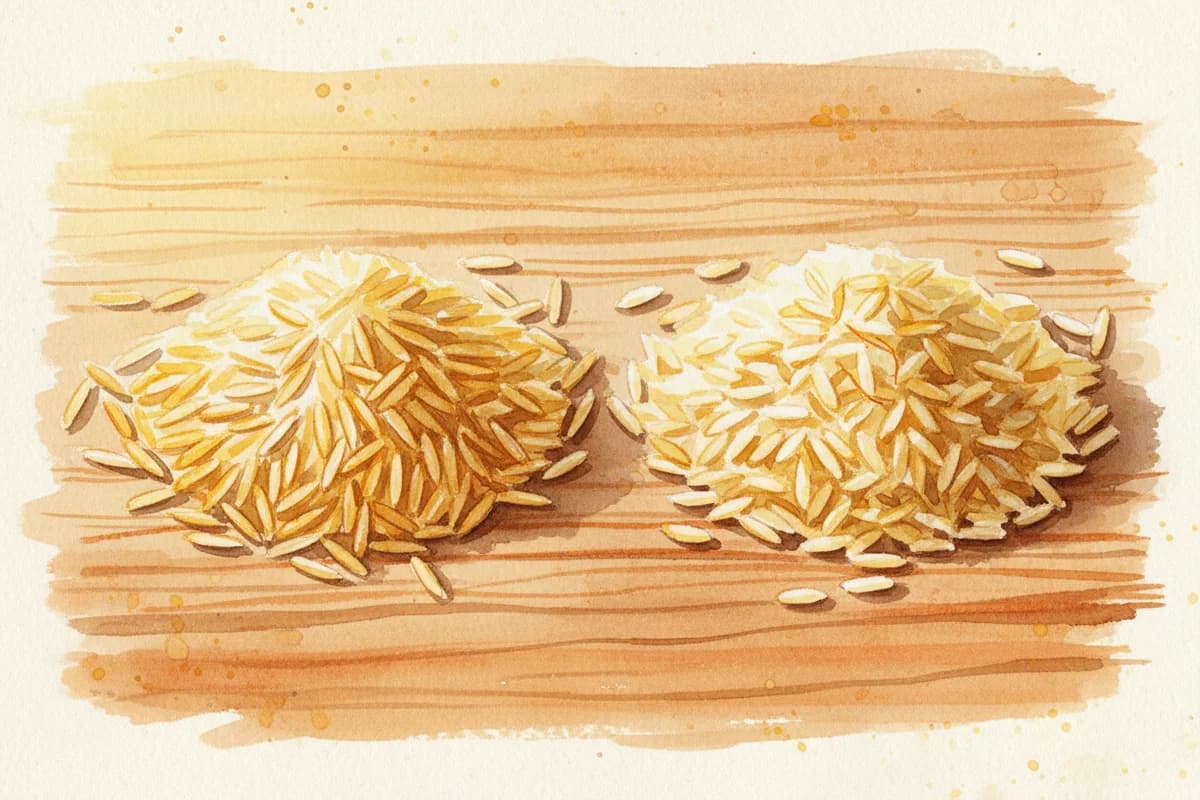
| Grain shape | Very long, slender | Long, slightly plumper |
| Cooked texture | Fluffy, separate grains | Soft, slightly sticky |
| Aroma | Nutty, floral (2-acetyl-1-pyrroline) | Sweet, floral, buttery |
| Glycemic index | 50-58 | 68-80 |
| Best for | Biryani, pulao, Indian food | Thai curries, stir fries, Southeast Asian |
| Elongation | Doubles in length when cooked | Expands in width |
| Aging | Improves with aging (1-2 years) | Best used fresh |
| Price | Higher (premium aged varieties) | Moderate |
The Key Differences
Texture After Cooking
This is the most important practical difference. Basmati grains stay separate and fluffy when properly cooked. Each grain elongates to nearly twice its raw length but remains distinct, never clumping. This is essential for biryani, where you need individual grains layered with sauce without becoming mushy.
Jasmine grains are softer and slightly sticky. They cling together gently, making them easy to eat with a fork or chopsticks. This stickiness is desirable in Thai and Southeast Asian cooking, where rice needs to soak up sauces and hold together on the spoon.Aroma
Both rices contain 2-acetyl-1-pyrroline, the compound responsible for that distinctive "popcorn-like" fragrance. But the flavor profiles differ:
Basmati has a nuttier, more restrained aroma that complements rather than competes with bold Indian spices. Jasmine has a sweeter, more floral, almost buttery scent that works beautifully with the lighter, fresher flavors of Thai and Vietnamese cooking.
Glycemic Index
This matters if blood sugar is a concern. Basmati has a significantly lower glycemic index (50 to 58) compared to jasmine (68 to 80). The difference is due to basmati's higher amylose content, a starch that resists digestion and produces a slower glucose response. For more on this topic, see our article on whether rice is fattening.
Aging
Basmati is unique among rices in that it improves with aging. Aged basmati (1 to 2 years) has lower moisture, cooks fluffier, and produces longer grains than fresh basmati. Premium Indian basmati brands proudly label their rice as "aged."
Jasmine, by contrast, is best fresh. Aged jasmine loses its signature aroma and becomes drier without the textural benefits that basmati gains.
When to Use Basmati
- Biryani. Non-negotiable. Jasmine rice in biryani will produce a sticky, clumpy mess instead of the distinct layered grains that define the dish.
- Pulao and jeera rice. The fluffy, separate texture of basmati allows each grain to be coated in the spiced fat.
- Served alongside dal and curry. When rice is a neutral partner to rich, saucy dishes, basmati's separateness keeps the plate from becoming mushy.
- Lemon rice and flavored rice dishes. Basmati absorbs flavors evenly while maintaining grain integrity.
- When glycemic index matters. Basmati is the better choice for anyone managing blood sugar, including people with diabetes or PCOS.
When to Use Jasmine
- Thai curries. Green, red, and massaman curries are designed to be eaten with jasmine rice. The slight stickiness helps the rice absorb the coconut-milk-based sauce.
- Stir-fried rice. Day-old jasmine rice makes better fried rice than basmati because it holds together without becoming too dry.
- Southeast Asian dishes. Vietnamese, Cambodian, and Laotian cuisines pair with jasmine.
- When you want a softer, comforting texture. Jasmine rice in a bowl with a simple broth or light curry has a comfort-food quality that fluffier basmati does not provide.
What About Other Indian Rice Varieties?
India grows many rice varieties beyond basmati:
- Sona Masoori: A medium-grain South Indian rice. Lighter than basmati, good for everyday meals, sambar rice, and curd rice.
- Ponni / Seeraga Samba: Used for Tamil Nadu biryani. Short-grained and aromatic with a distinctive flavor.
- Gobindobhog: A fragrant Bengali short-grain rice used for khichuri and payesh.
- Red rice (Matta): A parboiled Kerala rice with a chewy texture and nutty flavor.
- Black rice (Kavuni arisi): Used in Tamil and Northeast Indian dishes, deeply pigmented and nutritious.
How to Cook Each Perfectly
Basmati
- Rinse in cold water 3 to 4 times until the water runs mostly clear (this removes surface starch and prevents sticking)
- Soak for 30 minutes (this ensures even cooking and maximum elongation)
- Use a 1:1.5 ratio of rice to water
- Bring to a boil, reduce to the lowest heat, cover tightly, and cook for 12 to 15 minutes
- Let it rest covered for 5 minutes, then fluff with a fork
Jasmine
- Rinse once or twice (you want to keep some surface starch for the gentle stickiness)
- No soaking needed
- Use a 1:1.25 ratio of rice to water
- Bring to a boil, reduce to low, cover, and cook for 12 minutes
- Let it rest for 5 to 10 minutes before serving
The Clear Recommendation
For Indian cooking: basmati, always. The fluffy texture, lower glycemic index, and improvement with aging make it the right rice for virtually every Indian dish. For Thai and Southeast Asian cooking: jasmine. The soft stickiness and sweet aroma are what those cuisines are built around. For general everyday use: Basmati if you eat Indian food frequently. Jasmine if you cook more Southeast Asian. Having both in your pantry is ideal.The Bottom Line
Basmati and jasmine are both excellent rices, but they are not interchangeable. Using jasmine in biryani or basmati in a Thai curry will produce a technically edible but culinarily wrong result. Match the rice to the cuisine, and both will reward you.