The Quick Comparison
| Property | Ghee | Butter |
|---|---|---|
| Smoke point | 250°C (482°F) | 175°C (347°F) |
| Calories (1 tbsp) | 120 | 102 |
| Total fat | 14g | 11.5g |
| Saturated fat | 9g | 7.3g |
| Lactose | None | Trace amounts |
| Casein | None | Present |
| Water content | 0% | ~15-17% |
| Shelf life (no fridge) | 3-6 months | Days |
| Shelf life (fridge) | 12+ months | 1-2 months |
| Flavor | Nutty, caramelized | Creamy, mild |
| Best for | High-heat cooking, tadka | Baking, spreading, finishing |
What They Have in Common
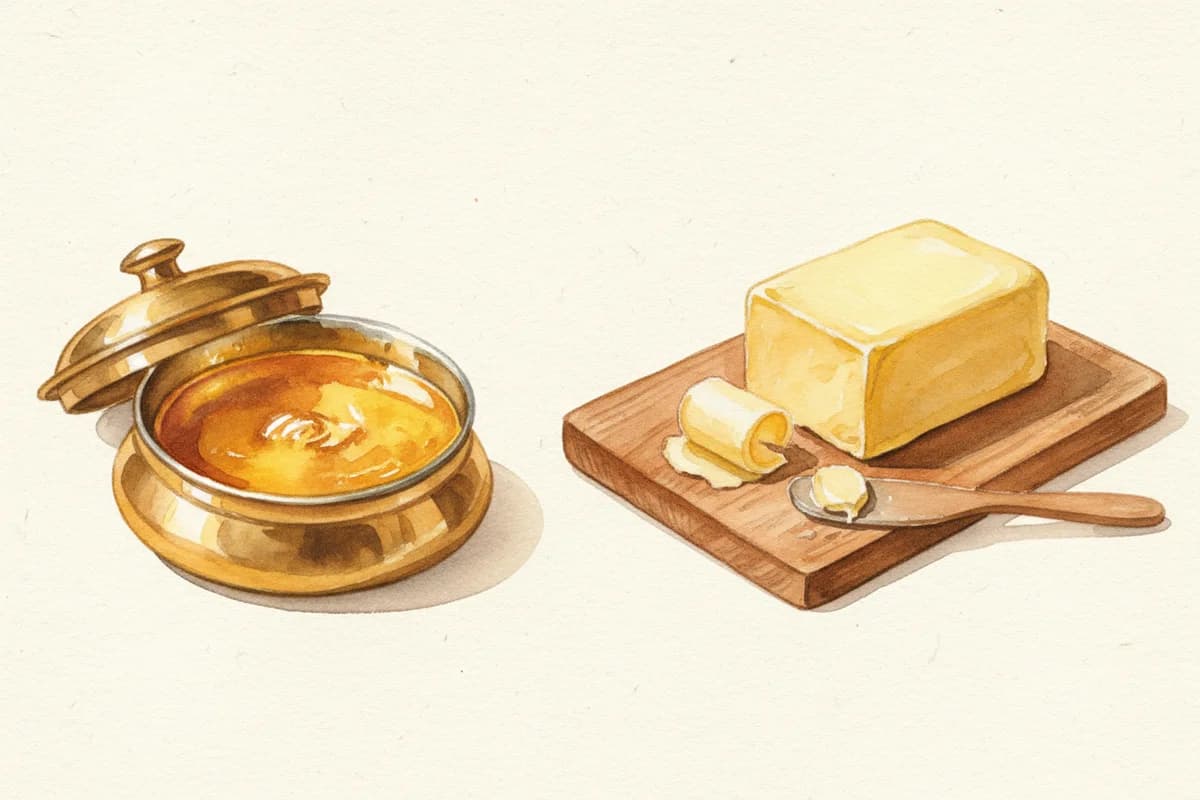
Both ghee and butter come from milk. Ghee is simply butter with the water and milk solids removed. They share the same fatty acid base and provide fat-soluble vitamins A, D, E, and K. Both add richness and flavor to food.
If you start with the same butter, the ghee you make from it will contain the same essential fats, just in a more concentrated, shelf-stable form.
Where Ghee Wins
High-Heat Cooking
This is the decisive advantage for Indian cooking. At 250°C, ghee can handle everything Indian cuisine demands: tempering whole spices in a screaming-hot pan, searing meat for biryani, making crispy parathas, and even deep frying.
Butter burns at 175°C. The milk solids char, creating bitter, acrid flavors and potentially harmful compounds. Every time you see a recipe that says "use butter" for a tadka or a sear, it is leading you toward burned milk solids. Use ghee instead.
Shelf Stability
Ghee lasts 3 to 6 months at room temperature and over a year refrigerated. Butter goes rancid within days without refrigeration. In a hot Indian kitchen, this difference is practical, not theoretical.
Lactose and Casein Free
The clarification process removes virtually all lactose and casein from ghee. For the roughly 65 to 70 percent of the global population that is lactose intolerant to some degree, ghee is often well tolerated when butter is not.
Flavor Concentration
The Maillard reaction that occurs when milk solids brown during ghee-making creates a deeper, more complex flavor than plain butter. That nutty, caramelized character is what makes a teaspoon of ghee on hot rice or dal so transformative.
Nutrient Concentration
Ghee contains more fat-soluble vitamins per tablespoon than butter simply because the water has been removed. It is also a source of butyric acid (important for gut health) and, when made from grass-fed butter, conjugated linoleic acid (CLA). For the full research breakdown, see our article on ghee and health.
Where Butter Wins
Baking
Western baking relies on butter's water content. The water creates steam in the oven, which helps pastries puff and creates flaky layers in croissants and pie crusts. Ghee, being 100 percent fat, does not provide this moisture. If a baking recipe calls for butter, use butter.
That said, Indian sweets like halwa and certain ladoos are specifically designed for ghee, not butter. Different baking traditions, different requirements.
Spreading
Cold butter spreads on toast. Cold ghee is a solid chunk. For spreading on bread, butter is more practical.
Raw Finishing
When you want a fresh, creamy dairy flavor on steamed vegetables or corn on the cob, butter's mild creaminess works better than ghee's nuttier profile.
Cost
Butter is cheaper than ghee because ghee requires more butter to produce (the water loss reduces volume by about 20 percent). If budget is the primary consideration, butter is more economical for applications where smoke point does not matter.
Flavor Subtlety
Ghee's robust, nutty flavor is an asset in Indian cooking but can overpower delicate dishes. In a subtle cream sauce, a light fish preparation, or delicate French cooking, butter's milder flavor may be more appropriate.
The Clear Recommendation
For Indian cooking: use ghee. The high smoke point, flavor depth, shelf stability, and cultural authenticity all point to ghee as the right fat for tadka, curries, biryani, parathas, dal finishing, and Indian sweets. For Western baking: use butter. The water content is functionally important, and the recipe was designed for it. For general cooking below 175°C: Either works. Sauteing vegetables, making eggs, or adding richness to a pasta sauce can be done with either ghee or butter based on your flavor preference. If lactose intolerant: use ghee. It provides all the dairy richness without the digestive issues.Can You Substitute One for the Other?
Ghee for butter in cooking: Almost always, yes. Use slightly less ghee than the butter called for (about 15 to 20 percent less) since ghee is 100 percent fat and butter contains water. Butter for ghee in Indian recipes: Only if you are willing to cook at lower temperatures and accept a different flavor profile. For tadka, the answer is really no. Butter will burn before the mustard seeds pop. In baking: Substituting ghee for butter changes the texture. The result will be denser and richer. Some bakers prefer this for cookies and shortbread, but it does not work for everything.The Bottom Line
Ghee and butter are siblings, not rivals. They come from the same source and share the same essential fats. The difference is in what has been removed (water and milk solids) and what that removal enables (higher heat, longer shelf life, deeper flavor).
For anyone cooking Indian food, the choice is clear. Ghee is the right tool for the job. For Western baking and spreading, butter takes the lead. And for everything in between, use whichever one makes you happier.
If you are new to ghee, start with our guide to what ghee is and how to use it. Your Indian cooking will improve immediately.