The Quick Comparison
| Factor | Store-Bought | Homemade |
|---|---|---|
| Flavor intensity | Moderate (fades with age) | Intense (freshly ground) |
| Aroma | Mild to moderate | Powerful, fills the kitchen |
| Freshness | Unknown (months to years old) | Made when you need it |
| Customization | Fixed recipe | Your preferred ratios |
| Consistency | Same every time | Varies (which can be good) |
| Time | 0 minutes | 10 minutes |
| Cost per batch | ~$3-5 (50g) | ~$2-4 (100g) |
| Ingredients | May include fillers | Only what you choose |
The Flavor Difference Is Real
Let us be direct: freshly made garam masala is dramatically better than store-bought. This is not subjective snobbery. It is chemistry.
Spice aroma comes from volatile essential oils. The moment you grind a spice, those oils begin escaping into the air. That wonderful smell when you grind cinnamon? Those are flavor compounds leaving the spice and entering your nose instead of your food.
Store-bought garam masala was ground weeks or months ago, then packaged, shipped, and sat on a shelf. By the time you use it, a significant portion of the volatile oils have dissipated. You are using a shadow of what the spices originally offered.
When you toast whole spices and grind them yourself, you capture those volatile oils at peak intensity. The difference in a finished dish is noticeable even to people who do not normally pay attention to spice quality.
What Is in Garam Masala?
There is no single "correct" garam masala recipe. Every family, every region, and every cook has their own version. But most recipes include some combination of:
The core (almost always present):- Cinnamon (dalchini) or cassia bark
- Green cardamom (elaichi)
- Cloves (laung)
- Black peppercorns (kali mirch)
- Cumin seeds (jeera)
- Coriander seeds (dhania)
- Bay leaves (tej patta)
- Nutmeg and mace (Kashmiri and Mughlai styles)
- Star anise (some North Indian blends)
- Black cardamom (Punjabi and Nepali styles)
- Fennel seeds (some South Indian versions)
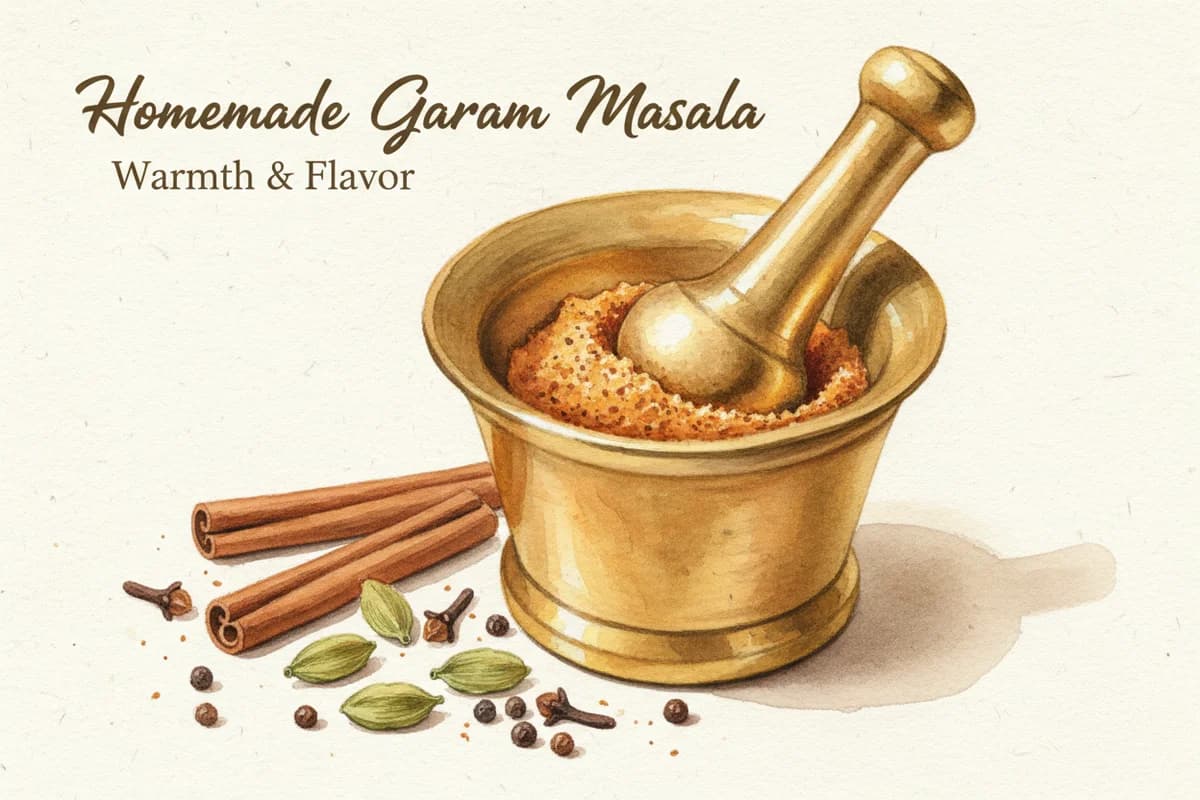
A Basic Homemade Garam Masala Recipe
Ingredients:- 2 tablespoons cumin seeds
- 2 tablespoons coriander seeds
- 1 tablespoon black peppercorns
- 2 teaspoons green cardamom pods (seeds only, or whole and sieved after)
- 1 teaspoon whole cloves
- 2 small cinnamon sticks (broken into pieces)
- 2 bay leaves
- Half a nutmeg (optional)
- Heat a dry skillet over medium-low heat.
- Add all whole spices. Toast, stirring frequently, for 3 to 4 minutes until fragrant and slightly darkened. Do not burn them. The moment you smell the aroma intensify, they are ready.
- Cool completely (this is important; grinding hot spices produces uneven results and can damage some grinders).
- Grind to a fine powder in a spice grinder, coffee grinder, or mortar and pestle.
- Store in an airtight glass jar away from light and heat.
The Problems with Store-Bought
Staleness
The biggest issue. Ground spices lose potency exponentially faster than whole spices. Most commercial garam masala has been ground for weeks or months before you buy it, then sits in your pantry for weeks or months more.
Fillers and Padding
Some lower-quality brands add rice flour, wheat flour, or excessive amounts of cheap spices (like coriander) to reduce cost. The ingredient list may technically include the right spices, but the ratios favor the cheapest ones.
Generic Flavor
Commercial garam masala aims for broad appeal, which means a balanced, middle-of-the-road flavor. If you prefer a more cardamom-forward blend for biryani or a more pepper-heavy blend for meat curries, store-bought cannot accommodate that.
Inconsistent Quality
Even reputable brands vary from batch to batch, and the spice quality of the source ingredients is not always transparent.
When Store-Bought Is Fine
Let us be practical. Not everyone wants to grind spices regularly. Store-bought garam masala is acceptable when:
- You are a beginner and are still developing your palate for Indian spices
- You cook Indian food occasionally (once or twice a month)
- You need convenience for a quick weeknight meal
- You buy from a high-turnover Indian grocery store where spices are fresher
- Brands from Indian grocery stores (higher turnover = fresher stock)
- Check the manufacture or expiration date
- Buy the smallest available size and replace frequently
- MDH, Everest, Badshah, and Shan are common brands with reasonable quality
When Homemade Makes a Difference
The flavor upgrade is most noticeable in dishes where garam masala is a primary flavoring agent:
- Biryani. The aroma of freshly ground garam masala in biryani is transformative. This is the single dish where homemade matters most.
- Finishing a dal or curry. When you sprinkle garam masala at the end of cooking, the freshness (or staleness) is immediately apparent.
- Meat marinades. Tandoori chicken and tikka marinades benefit enormously from freshly ground spices.
- Simple dishes where spices carry the flavor. Jeera rice, simple dal, aloo gobi. The fewer ingredients in a dish, the more each one matters.
Advanced: Multiple Garam Masalas
Serious Indian cooks often maintain two or three variations:
Light garam masala (cardamom, cinnamon, clove dominant) for biryani, pulao, and delicate dishes. Strong garam masala (cumin, pepper, coriander dominant) for robust curries, rajma, and meat dishes. Sweet garam masala (cardamom, cinnamon, nutmeg, mace dominant) for kheer, halwa, and festive sweets.This level of customization is impossible with store-bought blends.
The Bottom Line
If you make one change to improve your Indian cooking, make your own garam masala. The time investment is 10 minutes. The cost is comparable to or less than store-bought. And the flavor difference is the largest single improvement you can make to your cooking without changing any recipes.
Buy whole spices (they last 2 to 3 years). Toast them. Grind them. Store in glass. Use within 2 to 3 months. That is the entire process.
Your biryani will taste noticeably better. Your dal will smell different. And you will understand, on a sensory level, why Indian grandmothers never used pre-ground spice blends.
For a complete guide to the spices you need, see our 15 essential Indian spices article and explore our spice guide for detailed profiles of each spice.