The Fundamental Difference
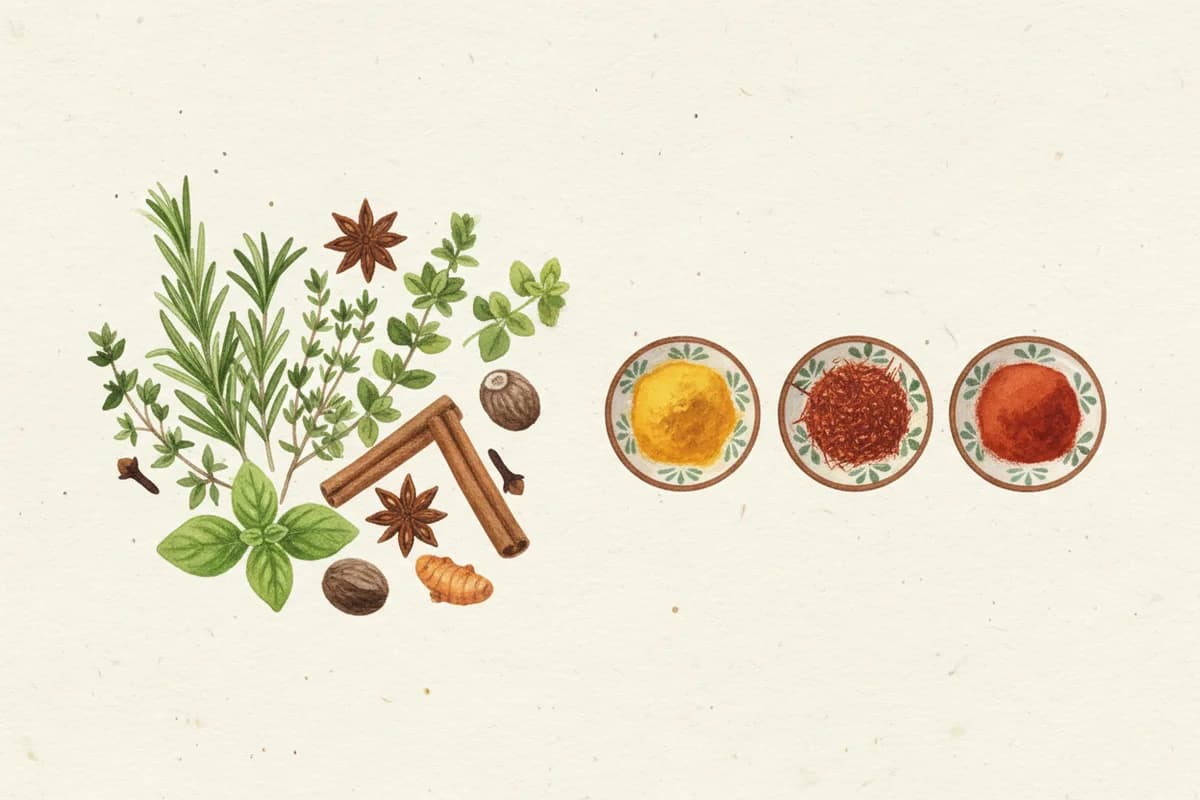
Fresh spices are living plant material: leaves, roots, and pods that are used soon after harvest. They bring brightness, moisture, and volatile aromas that dissipate quickly.
Dried spices are preserved through dehydration, which concentrates flavors, extends shelf life, and changes the flavor profile. Drying mellows sharp notes and develops deeper, warmer characteristics.
Indian cooking is one of the few cuisines that uses both extensively, often in the same dish at different stages. Understanding when to use which form is a key skill.
Fresh Spices in Indian Cooking
The Essential Fresh Ingredients
Ginger (adrak). Fresh ginger provides a sharp, juicy heat that dried ginger (sonth) cannot replicate. It is used in paste form for curry bases, sliced or julienned for garnish, and grated into tea. Dried ginger has a different, warmer flavor used in spice blends and some sweets. Green chilies. The bright, sharp heat of fresh green chilies (hari mirch) is fundamentally different from dried red chili powder. Green chilies provide a grassy, vibrant heat. Dried red chilies provide a deep, smoky warmth. Most Indian dishes use one or both, but they serve different purposes. Curry leaves (kadi patta). Fresh curry leaves have a citrusy, slightly nutty aroma that is irreplaceable. Dried curry leaves retain almost none of this fragrance and are barely worth using. If you cannot find fresh, skip them rather than using dried. Cilantro / coriander leaves (dhania patta). Used fresh as a garnish and in chutneys. The fresh leaves have a bright, polarizing flavor that completely disappears when dried. Dried cilantro is essentially flavorless. Mint (pudina). Fresh mint in chutneys, raita, and biryani provides a cool, sharp aroma. Dried mint retains some flavor but loses its brightness. For mint chutney, fresh is essential. Garlic (lehsun). Fresh garlic provides the pungent, sharp allicin that defines Indian curry bases. Garlic powder is a pale substitute that should only be used as a last resort.When Fresh Spices Are Non-Negotiable
- Chutneys and raw preparations: Mint chutney, cilantro chutney, ginger-garlic paste
- Garnishing: Fresh cilantro, mint, curry leaves scattered over finished dishes
- Ginger-garlic paste: The wet base of most North Indian curries demands fresh
- Raita: Fresh herbs mixed into yogurt
- Tadka with curry leaves: The sizzle of fresh curry leaves in hot oil is irreplaceable
Dried Spices in Indian Cooking
The Essential Dried Spices
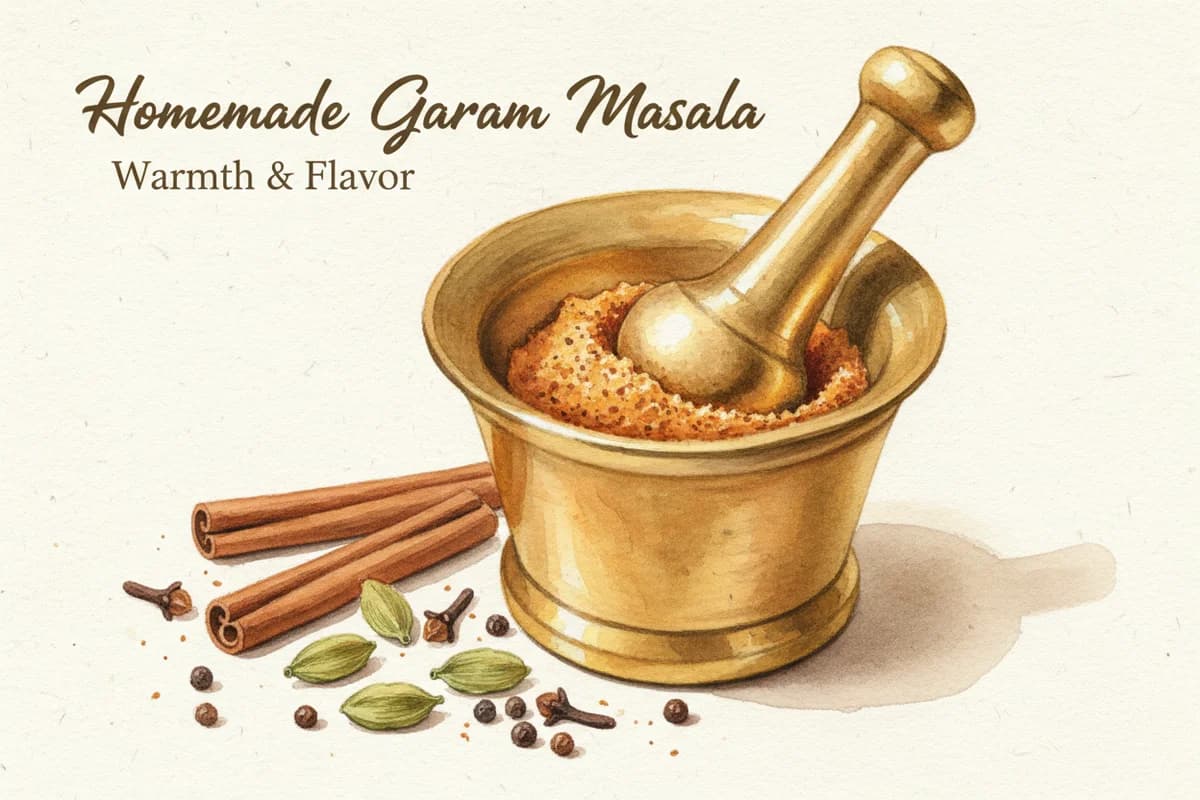
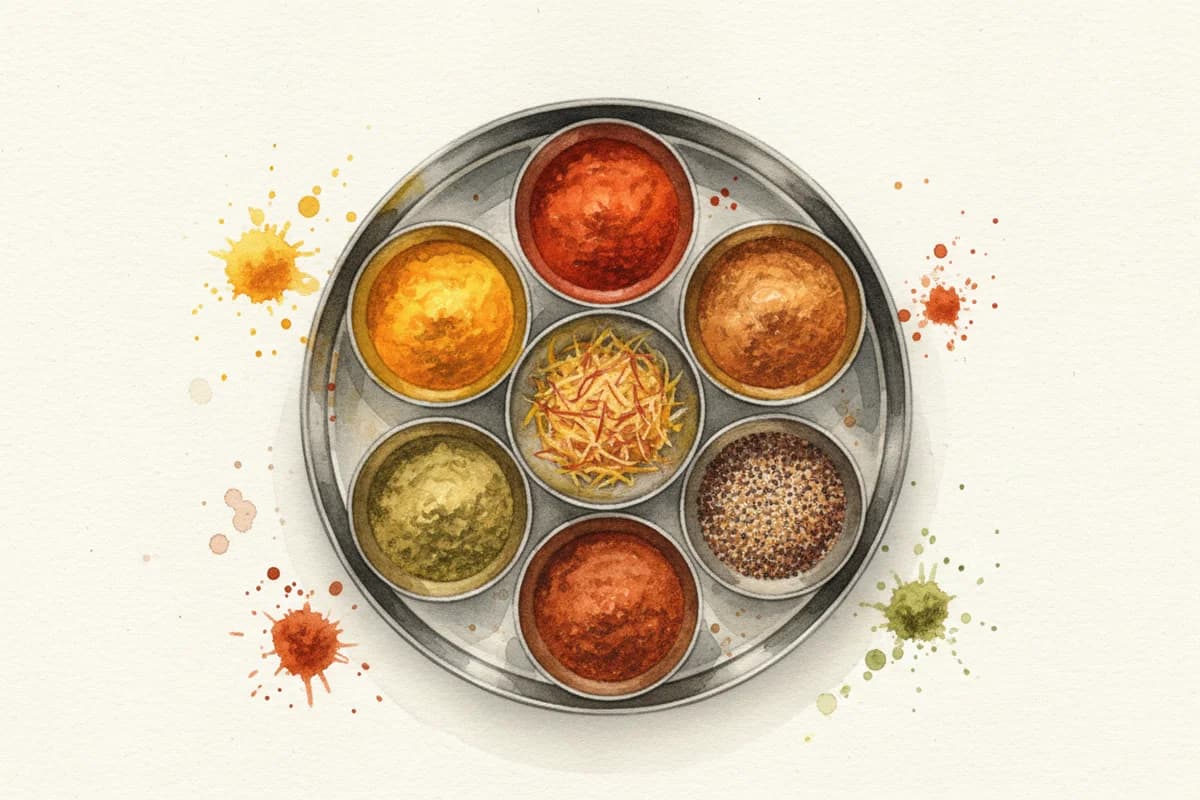
Cumin (jeera). Whole seeds for tadka, ground for body. Dried cumin develops an earthy, warm character that fresh cumin seed does not have. This is one spice where dried is the standard form. Coriander (dhania). Dried coriander seeds and powder have a completely different flavor from fresh cilantro leaves. The seeds are warm, citrusy, and slightly sweet. The leaves are bright and herbaceous. They are essentially two different ingredients that happen to come from the same plant. Turmeric (haldi). Almost always used dried and ground. Fresh turmeric root is occasionally used in South Indian cooking and pickling, but ground turmeric is the standard for its convenience and consistent color. See our article on turmeric research. Red chili powder (lal mirch). Provides consistent, measurable heat and deep red color. Different varieties (Kashmiri for color, Byadgi for flavor, Guntur for heat) serve different purposes. Garam masala. Always a dried spice blend. The roasting and drying of whole spices concentrates their essential oils. See our homemade vs. store-bought comparison. Fenugreek. Dried fenugreek leaves (kasuri methi) are used as a finishing herb. Fresh fenugreek leaves (methi) are used as a vegetable. Fenugreek seeds are used in tadka. Three forms, three different uses.When Dried Spices Are Essential
- Spice blends: Garam masala, sambar powder, chaat masala
- Base seasoning: Turmeric, chili powder, coriander powder in every curry
- Tadka: Whole cumin, mustard seeds, dried chilies in hot oil
- Long-cooked dishes: Dried spices infuse slowly over time in biryanis and curries
- Dry rubs and marinades: Tandoori chicken, tikka marinades
The Conversion Challenge
You cannot simply substitute dried for fresh or vice versa. The flavor profiles differ too much:
| Spice | Fresh form | Dried form | Substitutable? |
|---|---|---|---|
| Ginger | Sharp, juicy, bright | Warm, mellow | No (different uses) |
| Chilies | Green, grassy heat | Red, deep warmth | No (different character) |
| Curry leaves | Citrusy, fragrant | Almost flavorless | No (skip if no fresh) |
| Cilantro | Bright, polarizing | Essentially flavorless | No (skip if no fresh) |
| Turmeric | Earthy, mild | Concentrated, standard | Sometimes (fresh is milder) |
| Coriander | Herbaceous (leaves) | Warm, citrusy (seeds) | No (different ingredients) |
| Fenugreek | Vegetable (greens) | Herb (kasuri methi) | Partially (different uses) |
How Indian Cooking Uses Both
A single dish often uses both fresh and dried spices at different stages:
Stage 1 (Tadka): Dried whole spices (cumin seeds, mustard seeds, dried chili) in hot oil or ghee. Stage 2 (Base): Fresh ginger-garlic paste and fresh green chilies cooked with onions. Stage 3 (Body): Dried ground spices (turmeric, coriander, chili powder) added to the cooked base. Stage 4 (Finishing): Dried garam masala and kasuri methi sprinkled at the end. Stage 5 (Garnish): Fresh cilantro and fresh green chilies scattered on top.Five stages, alternating between fresh and dried, each contributing something the other cannot. This layered approach is what makes Indian spicing unique.
Storage and Quality
Fresh Spice Storage
- Ginger and garlic: Refrigerate unwrapped; use within 2 to 3 weeks
- Curry leaves: Wrap in paper towel, store in airtight container in fridge; use within 1 week (or freeze)
- Cilantro and mint: Trim stems, stand in water in the fridge like flowers; use within 5 days
- Green chilies: Refrigerate; use within 1 to 2 weeks (or freeze whole)
Dried Spice Storage and Shelf Life
- Whole spices: 2 to 3 years in airtight containers away from heat and light
- Ground spices: 6 to 12 months maximum (they lose potency quickly)
- Buy whole spices and grind as needed for the best flavor
- The sniff test: if a ground spice has no aroma when you open the jar, it is too old
- Store in a cool, dark place, not above the stove where heat degrades them
The Bottom Line
Fresh and dried spices are not competing options. They are complementary tools that serve different purposes at different stages of cooking. Indian cuisine's depth comes precisely from using both, layering the bright volatility of fresh ingredients over the deep warmth of dried spices.
Master both, and you will understand why Indian food tastes the way it does. Rely on only one, and you will always be missing half the picture.