The Short Answer
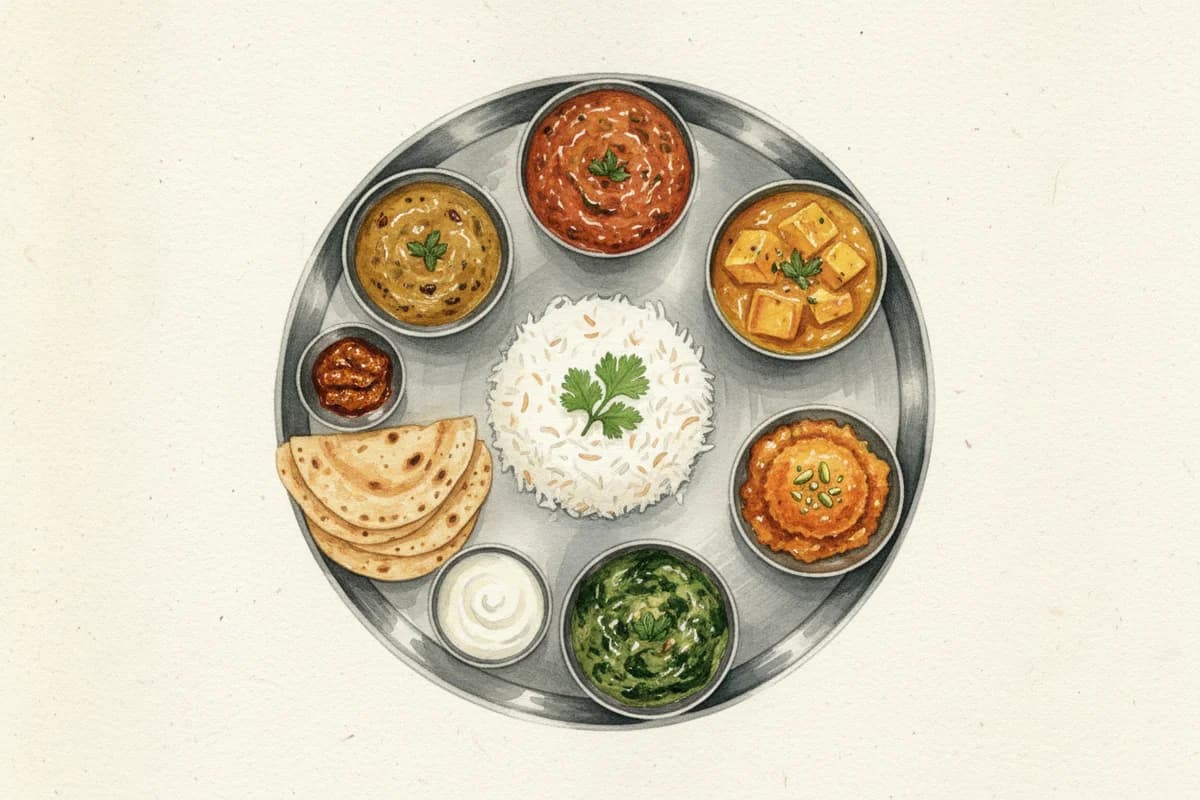
A thali (literally "plate" in Hindi) is a complete Indian meal served on a single large plate or steel tray, consisting of multiple small dishes arranged in small bowls (katoris) around a central serving of rice and/or bread. A typical thali includes dal, one or two vegetable dishes, rice, roti, a pickle, a papad, a raita or yogurt, and often a small sweet.
It is India's answer to the question "what should a complete meal look like?" and the answer, arrived at over centuries of practice, is remarkably aligned with modern nutritional science.
Anatomy of a Thali
The Essential Components
Every thali, regardless of region, includes these core elements:
A grain (anna). Rice, roti, or both. This is the carbohydrate foundation. In South India, rice dominates. In North India, roti takes the lead. Many thalis offer both. A dal or legume. The protein anchor. Toor dal, moong dal, chana dal, sambar, rasam, or kadhi, depending on the region. This is never optional. You can learn more about why lentils are nutritionally extraordinary. A vegetable dish (sabzi). At least one, often two or three. One might be a dry preparation (bhindi fry, aloo gobi) and another a wet curry (palak paneer, baingan bharta). This provides micronutrients, fiber, and variety. A yogurt element. Dahi, raita (yogurt with vegetables), or kadhi (yogurt-based curry). This provides probiotics, protein, calcium, and a cooling contrast to spicier dishes. A pickle or chutney (achaar / chatni). A small, intensely flavored condiment. Mango pickle, lime pickle, mint chutney, or tamarind chutney. These add a punch of flavor and, in the case of traditional pickles, fermented probiotics. A papad / appalam. A thin, crispy lentil wafer. Adds crunch and texture contrast. A sweet (optional but traditional). A small portion of kheer, gulab jamun, or a piece of mithai to end the meal.The Arrangement
On a traditional steel thali plate:
- Rice and/or roti go in the center
- Small katoris (bowls) are arranged around the perimeter
- Pickle and papad sit on the plate directly, not in bowls
- In South India, the thali is often served on a banana leaf
Regional Thali Styles
Gujarati Thali
Known for its sweet-sour balance. Includes dal, kadhi, 2 to 3 sabzis, roti, rice, pickle, papad, and usually a sweet like shrikhand. The distinctive feature is the interplay between sweet (jaggery in dal), sour (kokum, amchur), and savory elements. Often unlimited refills at restaurants.
Rajasthani Thali
Hearty and rich. Features dal-baati-churma (lentils with baked wheat balls and sweet crumble), gatte ki sabzi, ker sangri, and generous use of ghee. Reflects the desert state's reliance on shelf-stable ingredients.
South Indian Thali (Meals)
Served on a banana leaf. Includes rice, sambar, rasam, kootu, poriyal (dry vegetable), avial, curd, pickle, papad, and payasam. The meal follows a specific eating order, and each item has a designated place on the leaf. See our South Indian food guide for details.
Bengali Thali
Follows a strict course order: shukto (bitter) first, then dal, then vegetables, then fish or meat curry, then chutney, and ending with sweet (mishti doi or sandesh). The progression from bitter to sweet is deliberate and considered essential.
Punjabi Thali
Generous and rich. Features dal makhani, a paneer dish, a chicken or lamb curry (non-vegetarian version), butter naan or tandoori roti, raita, pickle, and usually a gulab jamun or kheer. This is the thali most non-Indians are familiar with from restaurants.
The Nutritional Genius of the Thali
The thali is not just culturally significant. It is nutritionally sophisticated:
Complete protein. The combination of dal (legume) with rice or roti (grain) provides all essential amino acids. The thali solves the "incomplete protein" concern without requiring any nutritional knowledge. Balanced macros. A typical vegetarian thali provides approximately 600 to 800 calories with 20 to 30 grams of protein, 25+ grams of fiber, and moderate fat from cooking oil or ghee. Use our meal analyzer to check the nutrition of your own thali combinations. Diverse micronutrients. By including 5 to 8 different dishes, a thali ensures exposure to a wide range of vitamins, minerals, and phytonutrients that no single-dish meal can provide. Built-in portion control. The small katoris naturally limit portions of richer dishes while the variety prevents the feeling of deprivation. You eat a little of everything rather than a lot of one thing. Six tastes (rasas). Ayurvedic tradition holds that a complete meal should include all six tastes: sweet, sour, salty, bitter, pungent, and astringent. A well-composed thali hits all six, which may explain why it feels so satisfying.The Thali Experience
Eating a thali is different from eating a single dish. Here is what the experience feels like:
You start by surveying the plate. Every component is visible, each a different color and texture. You mix a little dal with rice. Then a bite of sabzi with roti. Then a tang of pickle. Then a cooling spoonful of raita. Each bite is different. The flavors complement and contrast.
In many traditional settings, especially in South India and Gujarat, thali meals are served by people walking around with refill containers. You eat as much as you want, and the servers keep refilling. The phrase "unlimited thali" is not marketing. It is hospitality.
Making a Thali at Home
The thought of making 5 to 8 dishes might seem overwhelming. Here is the practical approach:
Plan around what you already have. A simple weeknight thali might include:- Dal (from a batch you made earlier in the week)
- One quick sabzi (15 minutes)
- Rice or roti
- Dahi from the fridge
- Store-bought pickle
The Bottom Line
The thali is Indian cuisine's greatest innovation in meal design. It takes the principles of nutritional balance, flavor variety, and satisfying eating and packages them into a single, beautiful plate.
For anyone trying to eat better, the thali offers a template that has worked for hundreds of millions of people for centuries: protein from dal, complex carbs from grains, micronutrients from vegetables, probiotics from yogurt, and a diversity of flavors that keeps every bite interesting.
You do not need an app or a meal plan to eat well. You need a thali. And now you know exactly what that means.