Indian Cooking Is Simpler Than You Think
Most Indian dishes follow the same basic formula: heat fat, bloom spices, cook an onion-tomato base, add the main ingredient, simmer. That is it. The hundreds of dishes you see on restaurant menus are variations on this single pattern, using different spice combinations and different proteins or vegetables.
You do not need 40 spices to start. You need 7. You do not need specialized equipment. You need one heavy pot. And you do not need years of practice. Your first dal will taste better than anything from a jar, and it will take you 30 minutes.
The reason Indian food seems complex is that recipes list 12 to 15 ingredients. But 7 of those are spices you measure once and dump in together. The actual cooking steps are fewer than a typical pasta dish.
The 7 Spices You Need to Start
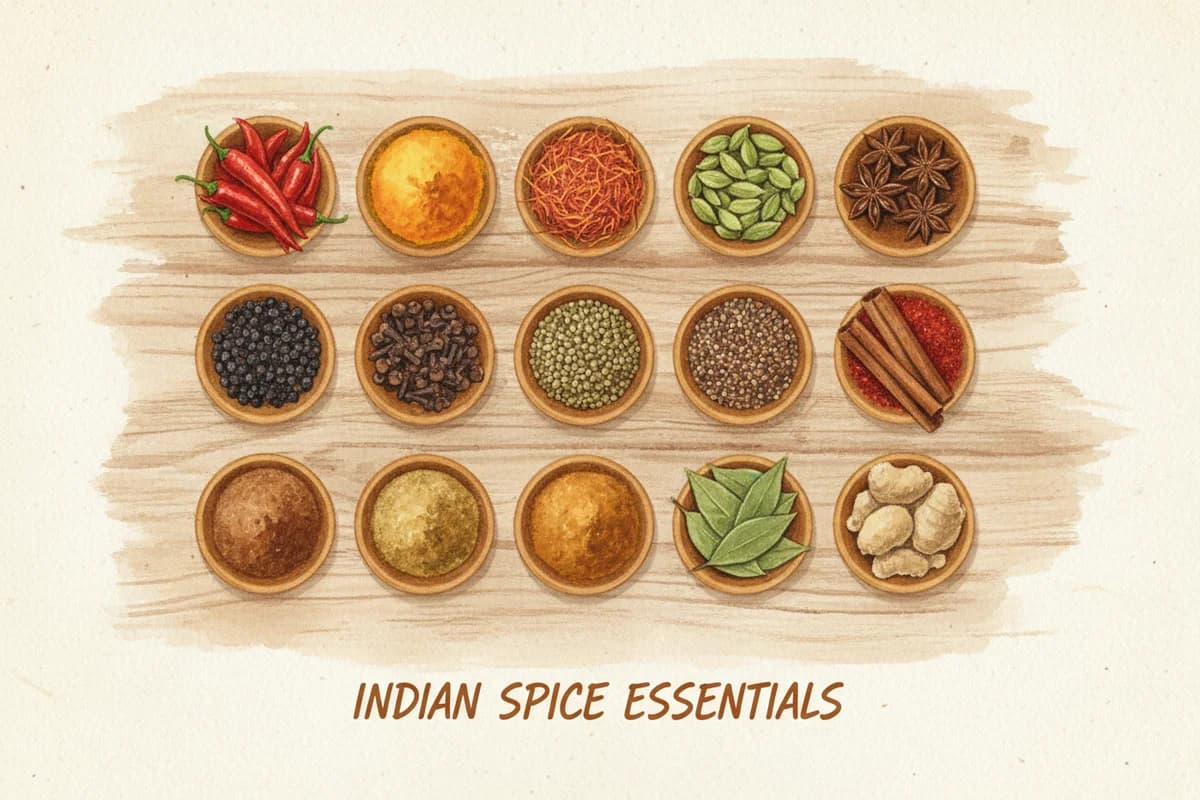
These 7 spices cover roughly 80 percent of Indian home cooking. Buy them in small quantities from an Indian grocery store (far cheaper and fresher than supermarket spice aisle jars) or order online.
1. Cumin seeds (jeera). Earthy, warm, and slightly nutty. The most-used spice in Indian cooking. You will add these to hot oil at the start of nearly every dish. 2. Turmeric powder (haldi). Bright yellow, mildly bitter, and earthy. Used in almost every savory Indian dish. Start with 1/4 to 1/2 teaspoon per dish. More is not better here. 3. Coriander powder (dhania). Mild, slightly citrusy, and warming. The backbone of most Indian curry bases. Use 1 to 2 teaspoons per dish. 4. Red chili powder (lal mirch). Provides heat. Kashmiri red chili powder gives color with mild heat. Regular red chili powder is hotter. Start with 1/4 teaspoon and adjust upward. 5. Garam masala. A pre-ground blend of warm spices (cinnamon, cardamom, cloves, black pepper, cumin). Added at the end of cooking for aroma. Start with 1/2 teaspoon per dish. 6. Mustard seeds (rai). Tiny black seeds that pop in hot oil and release a sharp, nutty flavor. Essential for South Indian and Gujarati cooking. 7. Ground cumin (jeera powder). Different from whole cumin seeds. Used as a finishing spice in raita, chaat, and sprinkled over yogurt. Warm and concentrated.With these 7, you can cook dal, aloo gobi, jeera rice, basic curries, raita, and masala chai.
The 3 Core Techniques
Tempering (Tadka)
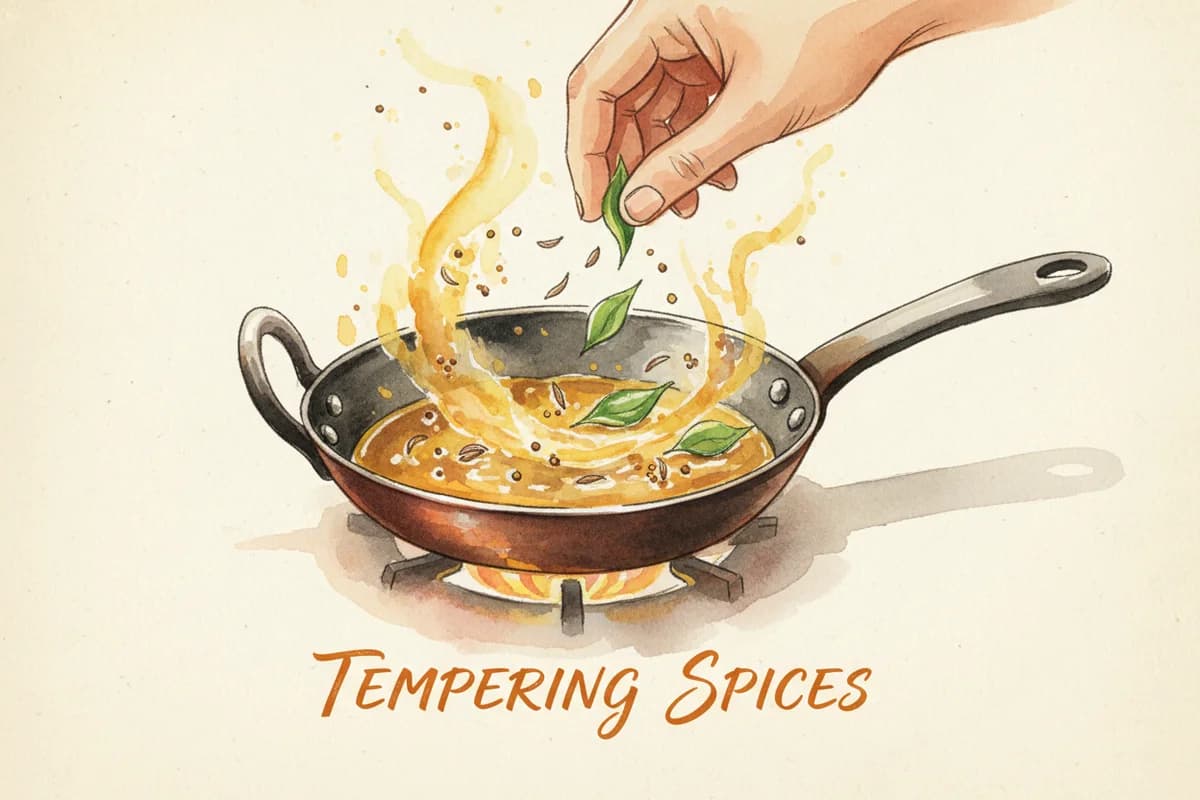
Tempering is the act of adding whole spices to hot oil or ghee for 15 to 45 seconds, until they sizzle, pop, and release their aroma. This flavored fat becomes the foundation of the dish or gets poured over a finished dish like dal.
The key rule: the oil must be hot before the spices go in. Drop one cumin seed into the oil. If it sizzles immediately, the oil is ready. If it sinks silently, wait. For a full breakdown, read our complete tadka guide.
Building an Onion-Tomato Base
Most Indian curries start the same way: after tempering, you add sliced or diced onions and cook them until golden brown (10 to 15 minutes on medium heat). Then you add ginger-garlic paste and cook for 1 to 2 minutes. Then chopped tomatoes, which cook down to a paste in 5 to 8 minutes.
This onion-tomato base is the gravy of Indian cooking. The color and flavor of your entire dish depend on how well you build this base. Do not rush the onions. Golden brown means golden brown, not pale beige.
Blooming Ground Spices
After the tomatoes break down, you add your ground spices (turmeric, coriander, chili powder) and stir them into the wet base for 1 to 2 minutes. This step is called blooming. The moisture from the tomatoes prevents the ground spices from burning while the heat activates their flavor compounds.
Never add ground spices directly to dry, hot oil. They will burn in seconds. Always add them to a wet base.
Your First 5 Recipes
Start with these 5 dishes. They are forgiving, use the 7 spices listed above, and teach you the core techniques.
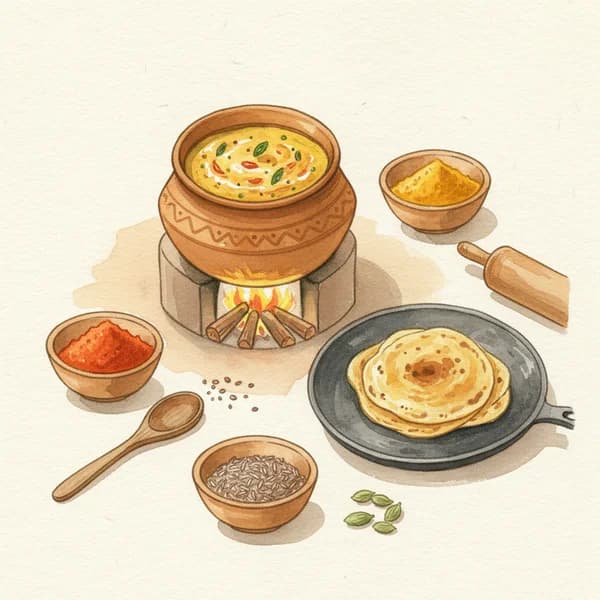
1. Simple Yellow Dal. Lentils cooked with turmeric and water, finished with a cumin-chili tadka. This is the most basic Indian dish and the most important one to master. If you can make dal, you can feed yourself Indian food for life. 2. Masala Chai. Spiced tea simmered with milk. Uses ginger, cardamom, and cinnamon. Takes 10 minutes. It is the gateway to understanding how spices interact with heat and liquid. 3. Aloo Gobi. Potato and cauliflower dry curry. Teaches you the onion-tomato base technique and how to cook vegetables in spices without a gravy. Ready in 25 minutes. 4. Jeera Rice. Basmati rice tempered with cumin seeds and ghee. Teaches the tadka technique applied to rice. Takes 20 minutes and pairs with every dal and curry you will ever make. 5. Cucumber Raita. Yogurt mixed with grated cucumber, ground cumin, and salt. No cooking required. Teaches you how a simple condiment transforms an entire Indian meal. Serve it alongside your dal and rice.Common Beginner Mistakes
Burning the spices. This is the number one mistake. Whole spices need 15 to 45 seconds in hot oil. Ground spices need 1 to 2 minutes in a wet base. If you see black specks or smell acrid smoke, start over. Burnt spices make the entire dish bitter and there is no way to fix it. Not enough oil for tempering. You need at least 1 to 2 tablespoons of oil or ghee for the spices to bloom properly. If you use too little, the spices fry unevenly and stick to the pan. Rushing the onions. Recipes say "cook until golden brown" and beginners give it 3 minutes. Real golden brown onions take 10 to 15 minutes on medium heat, sometimes 20. This single step determines whether your curry tastes flat or deeply flavored. Using stale spices. Ground spices lose potency after 6 months. Whole spices last about a year. If your turmeric has been in the cabinet since 2022, it is contributing color but no flavor. Buy small quantities and replace them regularly. Adding all spices at once. Whole spices go into hot oil at the start. Ground spices go into the wet onion-tomato base. Garam masala goes in at the end. The timing matters because each form of spice needs different conditions to release flavor.Essential Equipment
You do not need a kitchen full of Indian cookware. Three items handle everything.
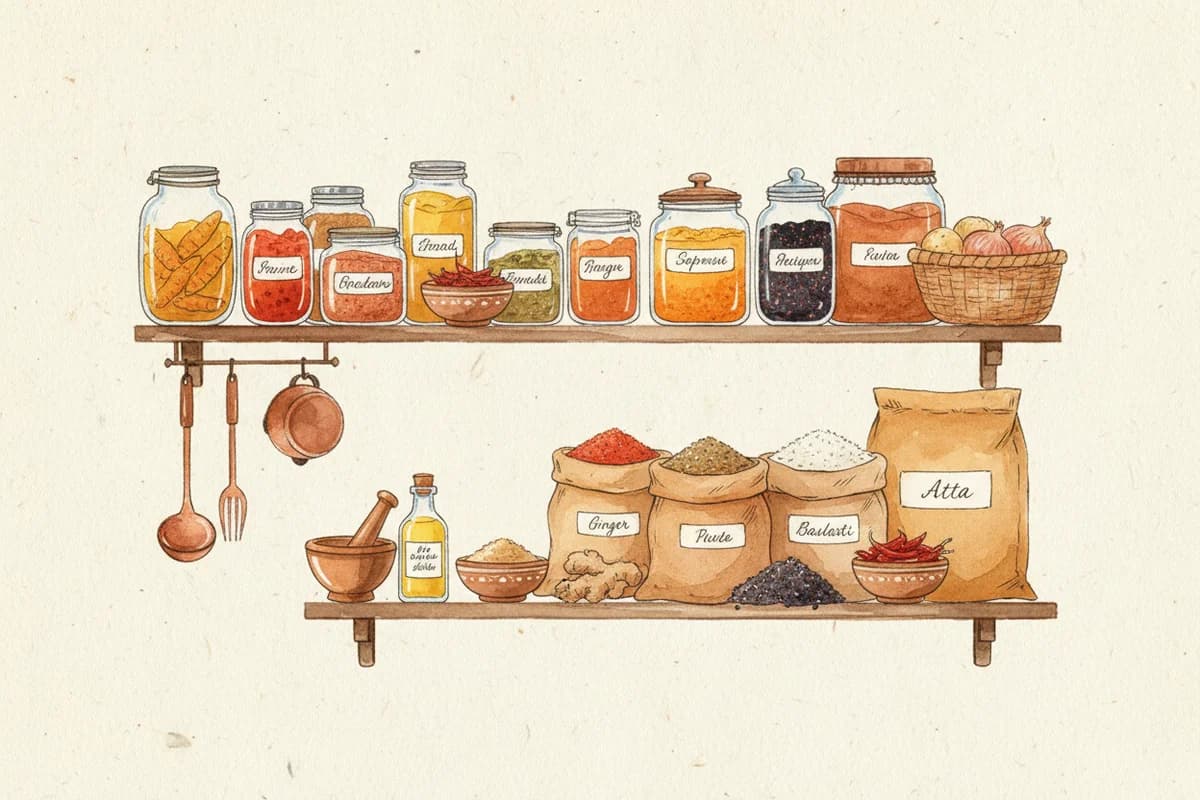
One heavy-bottomed pot (4 to 6 quart). For dal, curries, rice, and anything simmered. A Dutch oven or any thick-bottomed pot works. The heavy base prevents hot spots and burning. This is your single most important piece of equipment. One kadhai or deep skillet. A kadhai is a deep, wide Indian wok used for frying, sauteing, and making dry sabzis. A 10 to 12 inch deep skillet or regular wok serves the same purpose. One tawa (flat griddle), if you want to make roti. A flat cast iron or steel griddle for cooking flatbreads. A cast iron skillet flipped upside down also works. Skip this until you are comfortable with curries and dals.Western Substitutions Cheat Sheet
| Indian Ingredient | Western Substitute | Notes |
|---|---|---|
| Ghee | Unsalted butter or clarified butter | Butter works in most recipes. Ghee has a nuttier flavor and higher smoke point. |
| Curry leaves | Bay leaf + lime zest | Not identical, but captures the aromatic quality. Use 1 bay leaf + a pinch of lime zest for 8 to 10 curry leaves. |
| Mustard oil | Canola oil + pinch of mustard powder | Mustard oil has a sharp, pungent kick. The substitute is milder but functional. |
| Asafoetida (hing) | Onion powder + garlic powder | Use 1/4 teaspoon of each. Hing is used in dishes where onion and garlic are avoided. |
| Kasuri methi (dried fenugreek leaves) | Dried celery leaves or a pinch of maple syrup | The maple syrup mimics the sweet-bitter note. Use sparingly. |
| Tamarind paste | Lime juice + brown sugar | Mix 1 tablespoon lime juice with 1 teaspoon brown sugar per tablespoon of tamarind paste. |
| Jaggery | Dark brown sugar | Close enough for most recipes. Use equal amounts. |
| Amchur (dried mango powder) | Lime juice | Use 1 teaspoon lime juice per 1/2 teaspoon amchur. |
| Fresh green chilies | Serrano or jalapeno peppers | Serranos are closer in heat. Remove seeds for less heat. |
| Paneer | Extra-firm tofu or halloumi | Halloumi holds its shape when cooked. Tofu works in curries if pressed dry. |
How to Read an Indian Recipe
Indian recipes use specific phrases that can confuse beginners. Here is what they actually mean.
"Until the oil separates." When you cook a tomato-spice paste, the oil initially mixes into the sauce. As the water evaporates and the paste cooks down, the oil starts pooling around the edges and on the surface. This means the base is cooked through. It usually takes 8 to 12 minutes. "Crackle the mustard seeds." Add mustard seeds to hot oil. They will start popping and sputtering within 5 to 10 seconds. Cover the pan partially (they fly). When the popping slows to one pop every 2 to 3 seconds, they are done. "Golden brown onions." Not translucent, not light gold. The onions should be the color of caramelized honey, soft, and reduced to about one-third of their original volume. This takes 10 to 20 minutes depending on the quantity. "On dum" or "dum cooking." Sealing a pot with a tight lid (sometimes with dough around the edges) and cooking on the lowest possible heat. The trapped steam slow-cooks the food. This is how biryani gets its layered flavor. "Bhuno" or "bhunao." Stir-frying a masala paste on medium-high heat, scraping the bottom constantly, until the paste darkens and the oil separates. This concentrates flavor. It takes 5 to 10 minutes of active stirring.Building Your Confidence
Start with the most forgiving category of Indian food: dals and lentils. Lentils are nearly impossible to ruin. Even if your spice proportions are off, the dish will still taste good. Cook yellow dal 5 times before moving on. By the third time, you will not need the recipe.
Next, move to rice dishes. Jeera rice and simple pulao teach you how whole spices flavor a neutral base. Then attempt dry vegetable dishes like aloo gobi or bhindi (okra), which teach you the full onion-tomato-spice base technique.
Save breads for later. Roti requires a feel for dough hydration and rolling that takes practice. Biryani involves layering and timing that builds on every previous skill. These are month-two projects, not day-one projects.
The path is simple: dal, then rice, then dry sabzi, then gravy curry, then bread, then biryani. Each stage teaches the technique you need for the next. Within a month of cooking 3 to 4 times per week, you will have a reliable rotation of 8 to 10 Indian dishes you can make from memory.