What Makes Diwali Food Special
Diwali is a 5-day festival, and each day carries its own food significance. Day 1 (Dhanteras) calls for special sweets offered to Lakshmi, the goddess of wealth. Day 3, the main Diwali night, is the grand feast. Day 5 (Bhai Dooj) centers on a meal prepared by sisters for their brothers.
Food during Diwali serves a purpose beyond eating. Boxes of mithai (sweets) travel between homes as gifts. Plates of namkeen (savory snacks) sit on every table for visitors who drop in unannounced. The kitchen runs nonstop for days, and the emphasis is on abundance, generosity, and sharing.
Two categories dominate Diwali cooking: sweets and fried snacks. Both are prepared in large batches, often 3 to 5 days before the festival. The goal is to have enough to serve guests, gift to neighbors, and still have plenty left over for the family.
Diwali Sweets (Mithai): The Centerpiece
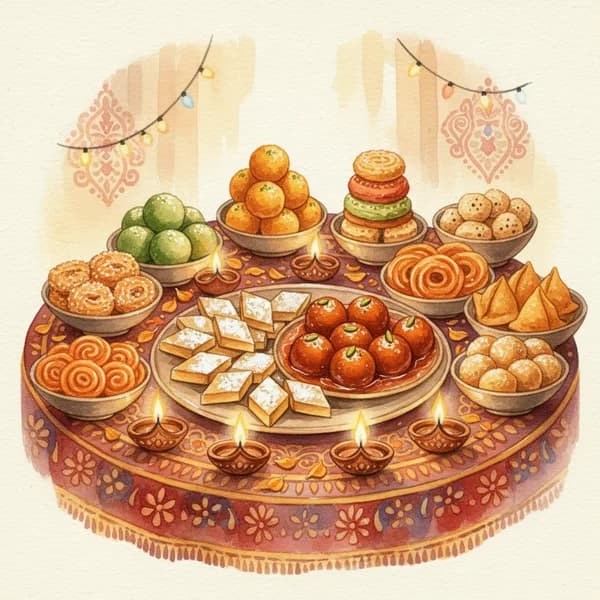
Sweets are the heart of Diwali. No home celebrates without them, and no guest leaves without eating at least one piece. Every region has its own signature mithai, and families pass down recipes through generations.
North Indian Sweets
Kaju katli (cashew diamond slices) is the single most popular Diwali sweet across India. It requires just 3 ingredients: cashews, sugar, and a touch of ghee. The technique lies in getting the sugar syrup to exactly the right consistency, a single-string stage that takes practice to master. Gulab jamun (deep-fried milk dumplings in rose-scented syrup) appears at nearly every Diwali gathering. Besan ladoo (chickpea flour balls with ghee and sugar) and barfi (milk fudge in dozens of flavors) round out the North Indian sweet table. Most families prepare 3 to 4 varieties and buy 2 to 3 more from a local halwai (sweet shop).South Indian Sweets
Mysore pak is a dense, ghee-rich sweet made from chickpea flour that originated in the kitchens of the Mysore palace. It crumbles on the tongue and tastes of pure roasted gram and ghee. Payasam (kheer in the North) is a slow-cooked milk and rice pudding flavored with cardamom and topped with fried cashews and raisins. South Indian families also prepare murukku, a crunchy spiral made from rice flour, which straddles the line between sweet and snack.Bengali Sweets
Bengal takes Diwali sweets into an entirely different register. Sandesh is made from fresh chhena (similar to paneer) mixed with sugar and shaped into intricate molds. Rasgulla, soft spongy balls of chhena in light sugar syrup, offers a lighter contrast. Mishti doi (sweetened yogurt set in clay pots) rounds out the Bengali Diwali table.
Gujarati Sweets
Gujarati cuisine brings its signature sweet-savory balance to Diwali. Mohanthal is a dense besan (chickpea flour) fudge flavored with saffron and cardamom. Ghughra (sweet stuffed pastries filled with coconut and dried fruit) is the Gujarati equivalent of a samosa, but sweet. Shakarpara (crispy diamond-shaped fried dough with sugar) is made in enormous batches and stored in tin containers for weeks.Diwali Snacks: The Namkeen Tradition
Every Indian household prepares a namkeen (savory snack mix) platter during Diwali. These snacks sit on the dining table throughout the festival period, available for anyone who walks through the door.
Chakli (spiral-shaped crunchy snacks made from rice flour and spices) and mathri (flaky, cumin-flavored crackers) are prepared in batches of 50 to 100 pieces. Sev (thin chickpea flour noodles) and mixture (a blend of fried lentils, peanuts, and spices) fill large steel containers.Diwali is also peak season for samosas and pakoras. Families fry samosas in batches of 30 to 50, filling them with spiced potatoes and peas. Pakoras (vegetable fritters made with chickpea flour batter) use whatever vegetables are in season: onions, spinach, potatoes, and paneer.
Main Course Traditions
Diwali dinner on the main night is the most elaborate home-cooked meal of the year for most Indian families. The spread varies dramatically by region.
Punjabi Diwali Dinner
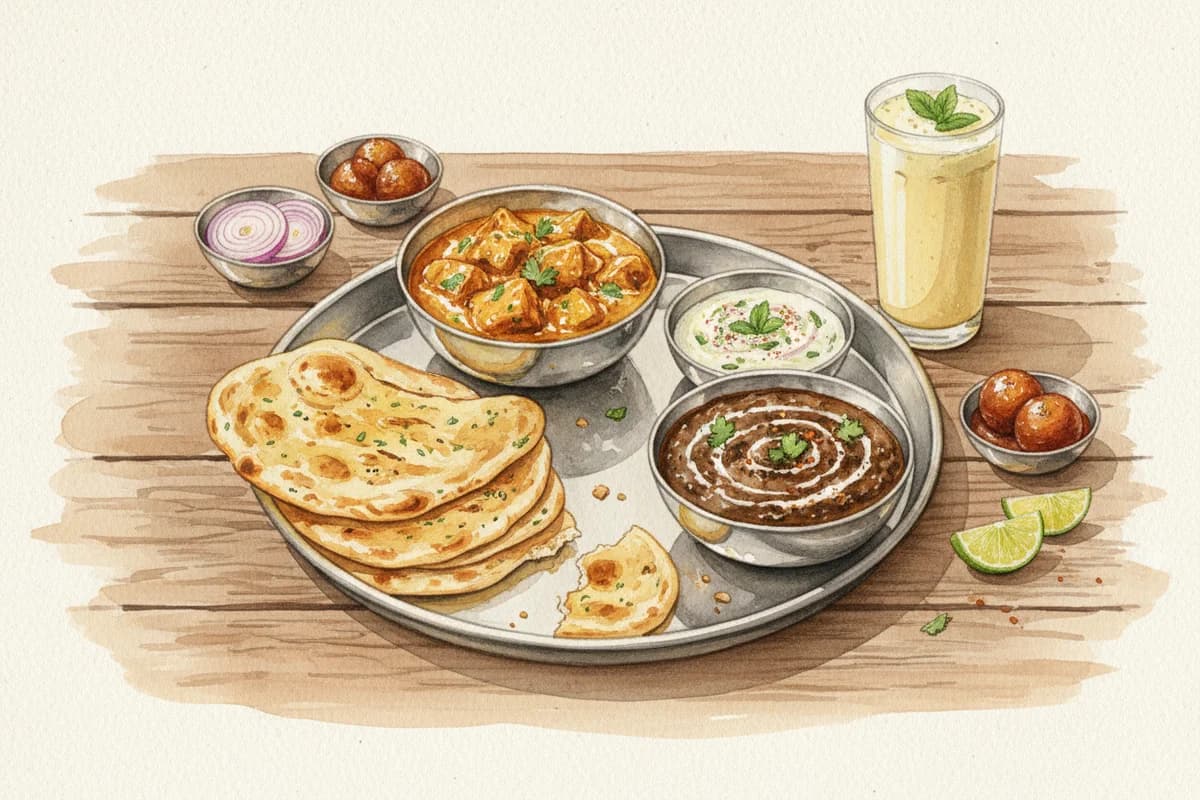
A Punjabi Diwali table typically includes chole (chickpea curry), paneer butter masala, dal makhani, and jeera rice or a layered biryani. Naan or puri (fried bread) accompanies the meal. The flavors are rich, heavy on butter, cream, and tomato. A Punjabi Diwali dinner for 8 people requires roughly 4 to 5 main dishes, 2 breads, a raita, and 2 to 3 sweets.
Gujarati Diwali Spread
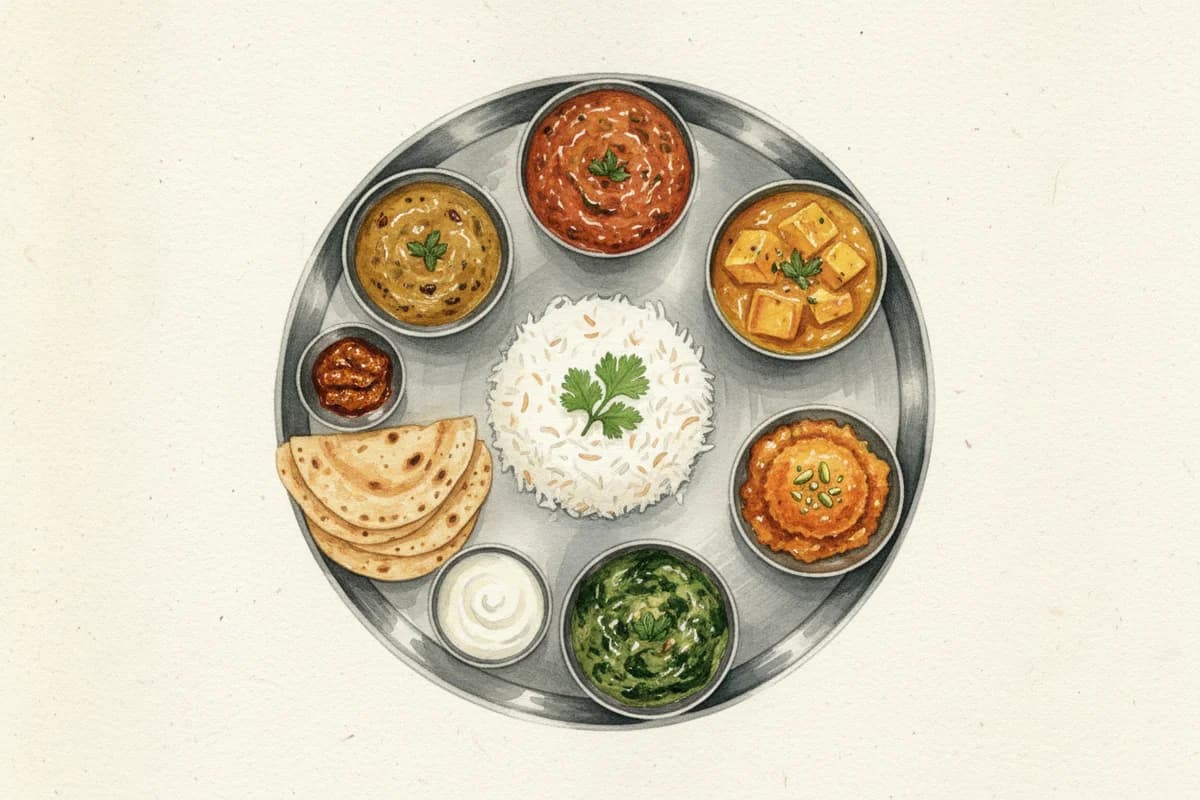
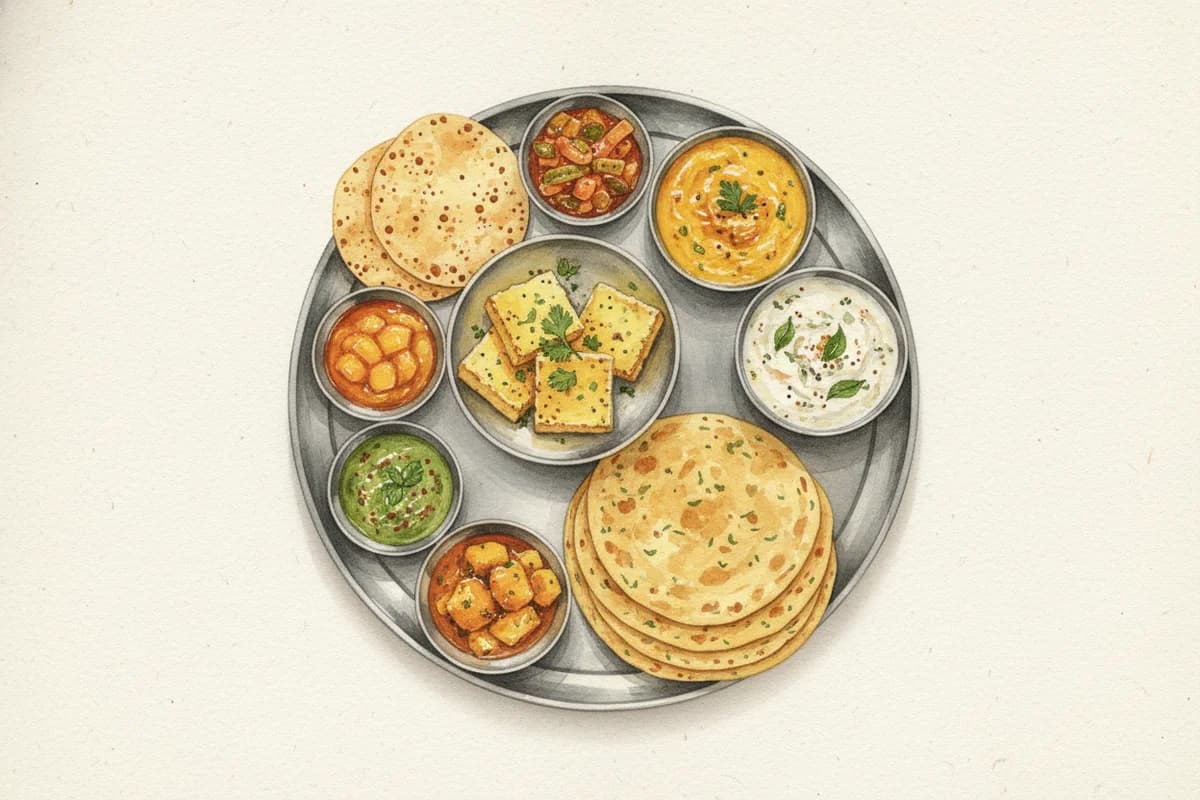
Gujarati families serve a thali-style meal with 8 to 12 small dishes. Undhiyu (a mixed vegetable dish with fenugreek dumplings) is the Diwali centerpiece in Gujarat. It appears alongside puri, shrikhand (sweetened strained yogurt), dal, and an assortment of pickles and chutneys.
South Indian Diwali Feast
In South India, Diwali morning starts with an oil bath followed by a feast. The spread often includes vada (fried lentil fritters), payasam, rice with sambar and rasam, and a fresh coconut chutney. Chettinad families add chicken curry with freshly ground spice paste.
Regional Diwali Food Differences
| Region | Signature Sweet | Signature Snack | Main Dish | Unique Tradition |
|---|---|---|---|---|
| Punjab | Kaju katli, gulab jamun | Mathri, samosa | Chole, paneer dishes | Puri served at breakfast on Diwali morning |
| Gujarat | Mohanthal, ghughra | Chakli, fafda | Undhiyu, shrikhand | Sweets exchanged between in-laws |
| Bengal | Sandesh, rasgulla | Nimki, chanachur | Fish curry, luchi | Kali Puja feast on Diwali night |
| South India | Mysore pak, payasam | Murukku, ribbon pakoda | Vada, sambar rice | Oil bath before the morning feast |
| Rajasthan | Ghevar, mawa kachori | Sev, shakarpara | Dal baati churma | Sweets offered to Lakshmi with silver coins |
| Maharashtra | Karanji, anarse | Chakli, chivda | Puran poli, usal | Faral (snack platter) prepared 5 days ahead |
Diwali Food Timeline: What to Make When
Preparing Diwali food requires planning. Here is a practical timeline that prevents last-minute kitchen chaos.
5 Days Before
Prepare all namkeen (dry snacks). Chakli, mathri, shakarpara, sev, and mixture all store well in airtight containers at room temperature for 2 to 3 weeks. Make these first and get them out of the way.
3 Days Before
Make sweets that keep well at room temperature: kaju katli, barfi, ladoo, and mohanthal. Store in steel containers lined with parchment paper. Do not refrigerate kaju katli, as it hardens.
1 Day Before
Prepare curry bases and gravies. Cook the chole, dal makhani, and any slow-cooked dishes. These taste better the next day as the flavors develop overnight. Soak any beans or lentils you need for the main feast.
Day Of
Focus on fresh items: fry puris, make rice, reheat gravies, prepare raita, and plate the sweets. Fry samosas and pakoras last, so they stay crisp. Set out the namkeen platter at least 1 hour before guests arrive.
Hosting a Diwali Dinner for Non-Indian Friends
If you are introducing friends to Diwali food for the first time, keep the menu approachable. A 3-course menu works better than an overwhelming 12-dish spread.
Starter: Samosas with green chutney and tamarind chutney. Familiar shape, bold flavor, and easy to eat by hand. Serve 2 to 3 per person. Main course: Butter chicken or paneer butter masala, jeera rice, naan, and a cucumber raita. These are crowd-pleasing dishes with broad appeal. Label the spice level so guests know what to expect. Dessert: Gulab jamun (warm, served in syrup) or mango kulfi. Both are sweet, aromatic, and unlike anything in Western cuisine. Offer kaju katli alongside as a lighter option.Set out a small namkeen platter with chakli and cashews for guests to snack on while you cook. Light a few diyas (clay oil lamps) on the table. Explain the significance of each dish briefly. People enjoy food more when they understand its story.
Healthier Diwali Alternatives
Traditional Diwali food is rich by design. The festival celebrates abundance, and the recipes reflect that. But you can make lighter versions without losing the spirit.
Baked samosas use the same filling but swap deep frying for a 200°C (400°F) oven for 25 minutes. Brush with oil before baking for a golden crust. They will not be identical to fried samosas, but they are satisfying. Date and nut ladoo replace sugar with Medjool dates and use a mix of almonds, cashews, and desiccated coconut. No cooking required. Blend, roll, and refrigerate. Each ladoo contains roughly 80 calories compared to 150 in a traditional besan ladoo. Air-fried chakli and murukku cut oil by 70 to 80 percent. The texture is slightly different (less shatteringly crispy) but still crunchy enough to satisfy.For sweets, reduced-sugar kaju katli works well because the cashew flavor is strong enough to carry the sweet with 30 percent less sugar. Phirni made with almond milk instead of full-fat milk cuts calories by roughly 40 percent while keeping the cardamom and saffron flavors intact.
The key is to choose 1 or 2 traditional recipes to make in their original form and lighten the rest. Diwali comes once a year. A few pieces of proper gulab jamun will not undo a year of healthy eating.