Indian Diet for Diabetes: Complete Guide with Glycemic Index Chart
Medical Disclaimer
This content is for educational purposes only. It is not medical advice, diagnosis, or treatment. Consult your doctor or registered dietitian before making dietary changes, especially if you have a medical condition or are taking medication.
If you have diabetes, work with your healthcare provider to develop a diet plan that is right for you. The information below summarizes published research but is not a substitute for personalized medical guidance.
In This Article
India's Diabetes Crisis by the Numbers
India has approximately 101 million people living with diabetes and another 136 million with prediabetes [5]. These numbers make India the country with the second highest diabetes burden in the world, and the trajectory is still rising.
Yet India also has one of the world's most sophisticated food traditions, built around ingredients that modern research identifies as beneficial for blood sugar management: lentils, whole grains, bitter vegetables, fermented foods, and bioactive spices.
The problem is not Indian food. The problem is that modern Indian eating patterns have drifted far from the traditional template. This guide is about getting back to what works.
This article is for informational purposes only. It does not replace medical advice. If you have diabetes or prediabetes, work with your doctor and a qualified dietitian to create a plan specific to your condition. Never adjust medications based on dietary information alone.Understanding Glycemic Index in the Indian Context
The glycemic index (GI) measures how quickly a food raises blood sugar on a scale of 0 to 100. Foods are classified as:
- Low GI: 55 or below
- Medium GI: 56 to 69
- High GI: 70 or above
Most importantly, meal context changes everything. The GI of individual foods measured in isolation is very different from how those foods behave when eaten as part of a complete Indian meal with protein, fat, and fiber.
Glycemic Index Chart: 50+ Indian Foods
Grains and Breads
| Food | GI | GL (per serving) | Notes |
|---|---|---|---|
| Bajra (pearl millet) roti | 55 | 12 | Excellent choice |
| Jowar (sorghum) roti | 62 | 13 | Good alternative |
| Ragi (finger millet) roti | 61 | 11 | High in calcium |
| Whole wheat roti | 62 | 13 | Standard, acceptable |
| Brown rice | 50 | 16 | Better than white |
| Basmati rice (white) | 58 | 22 | Better than short-grain |
| Regular white rice | 73 | 30 | High GI, limit portions |
| Parboiled rice | 38 | 14 | Surprisingly low GI |
| Poha (flattened rice) | 64 | 18 | Medium, watch portions |
| Upma (semolina) | 55 | 15 | Better than expected |
| Oats (cooked) | 55 | 13 | Good breakfast option |
| Maida naan | 70 | 24 | Avoid or limit |
| White bread | 75 | 25 | Avoid |
| Dosa (plain, fermented) | 60 | 17 | Fermentation helps |
| Idli | 60 | 15 | Fermentation reduces GI |
Lentils and Legumes
| Food | GI | GL (per serving) | Notes |
|---|---|---|---|
| Moong dal (cooked) | 25 | 5 | Excellent |
| Masoor dal (red lentil) | 26 | 5 | Excellent |
| Toor dal (pigeon pea) | 29 | 6 | Excellent |
| Chana dal (split chickpea) | 8 | 2 | Lowest GI legume |
| Urad dal (black gram) | 27 | 5 | Excellent |
| Rajma (kidney beans) | 28 | 7 | Excellent |
| Chole (chickpeas) | 28 | 8 | Excellent |
| Lobhia (black-eyed peas) | 33 | 8 | Very good |
| Sprouted moong | 25 | 4 | Even lower GI than cooked |
Vegetables
| Food | GI | GL (per serving) | Notes |
|---|---|---|---|
| Karela (bitter gourd) | 15 | 1 | May directly lower blood sugar |
| Methi (fenugreek) leaves | 15 | 1 | Research supports glucose benefits |
| Palak (spinach) | 15 | 1 | Minimal glycemic impact |
| Bhindi (okra) | 20 | 2 | Contains mucilage that slows absorption |
| Lauki (bottle gourd) | 15 | 1 | Very low calorie, low GI |
| Tinda, tori, parwal | 15 | 1 | All gourds are excellent |
| Baingan (eggplant) | 15 | 2 | Excellent |
| Gobhi (cauliflower) | 15 | 1 | Excellent |
| Aloo (potato) | 78 | 21 | High GI, limit portions |
| Arbi (colocasia) | 75 | 18 | High GI, limit |
| Shakarkandi (sweet potato) | 63 | 14 | Better than regular potato |
Fruits
| Food | GI | GL (per serving) | Notes |
|---|---|---|---|
| Guava | 12 | 2 | Best fruit for diabetics |
| Jamun (Indian blackberry) | 25 | 3 | Traditional anti-diabetic |
| Amla (Indian gooseberry) | 15 | 1 | Very low GI |
| Apple | 36 | 5 | Good choice |
| Orange | 43 | 5 | Good choice |
| Papaya | 60 | 9 | Moderate, watch portions |
| Mango | 56 | 12 | Limit to small portions |
| Banana (ripe) | 62 | 14 | Limit; unripe is lower GI |
| Watermelon | 76 | 4 | High GI but low GL (mostly water) |
| Chikoo (sapota) | 55 | 12 | Moderate |
| Grapes | 46 | 8 | Moderate |
Dairy
| Food | GI | GL (per serving) | Notes |
|---|---|---|---|
| Dahi (plain yogurt) | 14 | 1 | Excellent, probiotic benefits |
| Paneer | 0 | 0 | No carbs, no glycemic impact |
| Buttermilk (chaas) | 15 | 1 | Excellent drink choice |
| Milk (full fat) | 27 | 3 | Low GI |
| Lassi (sweetened) | 45 | 12 | Avoid sweetened; plain is fine |
Foods to Eat Freely
These foods have minimal glycemic impact and provide nutrients that may support blood sugar management:
Dal and legumes. Research consistently shows that pulse consumption improves glycemic control [2]. A meta-analysis of 41 randomized controlled trials found significant improvements in fasting glucose and insulin levels with regular legume intake. Eat dal at every meal if possible. See our detailed article on lentils and protein. Non-starchy vegetables. Karela (bitter gourd), methi leaves, palak, bhindi, lauki, tori, tinda, parwal, gobhi, beans, and leafy greens. Load your plate with these. They provide fiber, micronutrients, and volume with almost no glycemic impact. Spices and herbs. Turmeric (anti-inflammatory), fenugreek seeds (research suggests blood sugar benefits [3]), cinnamon (some studies suggest modest glucose-lowering effects), and black pepper (enhances absorption of other beneficial compounds). Fermented foods. Plain dahi, buttermilk, homemade pickles, idli, and dosa batter. Fermentation reduces glycemic impact and supports gut health, which research increasingly links to glucose metabolism. Nuts and seeds. Almonds, walnuts, flaxseeds, pumpkin seeds, and sunflower seeds. High in protein, healthy fats, and fiber. A small handful (30 grams) makes an excellent snack with virtually no blood sugar impact. Healthy fats. Ghee in moderation (1 to 2 teaspoons per meal), mustard oil, and coconut oil. Fat slows gastric emptying and glucose absorption.Foods to Limit
These foods have a significant glycemic impact and should be consumed in controlled portions:
Polished white rice. Switch to parboiled rice (GI 38), brown rice (GI 50), or basmati (GI 58). If you eat white rice, reduce the portion to half a cup and always pair with dal and vegetables. The Mohan study showed that adding legumes to white rice reduced the glycemic response to levels comparable to brown rice alone [1]. Potatoes and starchy roots. Aloo, arbi, and suran have high glycemic indexes. Limit to small portions (half a potato at most) and always eat with protein and fat, never alone. Maida products. Naan, kulcha, white bread, biscuits, rusks, and bakery items made with refined flour. These spike blood sugar rapidly. Switch to whole wheat or millet alternatives. Sweetened beverages. Chai with sugar, lassi with sugar, fruit juice, soda, and sweetened buttermilk. These are among the fastest ways to spike blood sugar. Drink chai without sugar or with a small amount of stevia. Eat whole fruit instead of juice. Packaged snacks. Chips, namkeen, biscuits, and processed foods typically combine refined carbohydrates with unhealthy fats, a combination that is particularly damaging for blood sugar and insulin sensitivity. Sweets and mithai. Gulab jamun, jalebi, ladoo, barfi, and halwa are high in both sugar and refined carbohydrates. Reserve for rare occasions and very small portions.Foods to Approach with Caution
Fruit. Fruit is healthy but contains natural sugars. Stick to 1 to 2 servings per day, choose low-GI options (guava, jamun, apple, citrus), eat whole fruit rather than juice, and combine with protein (like a small handful of nuts) to blunt the glucose spike. Whole wheat roti. Roti is better than naan or bread, but it is still a carbohydrate source. Two rotis per meal is a reasonable limit for most diabetics. Consider millet rotis (bajra, jowar, ragi) which offer more fiber and a slightly lower glycemic response. Dried fruits. Dates, raisins, and dried figs are concentrated sugar sources despite being "natural." Limit to 1 to 2 pieces if used at all.The Power of Meal Composition
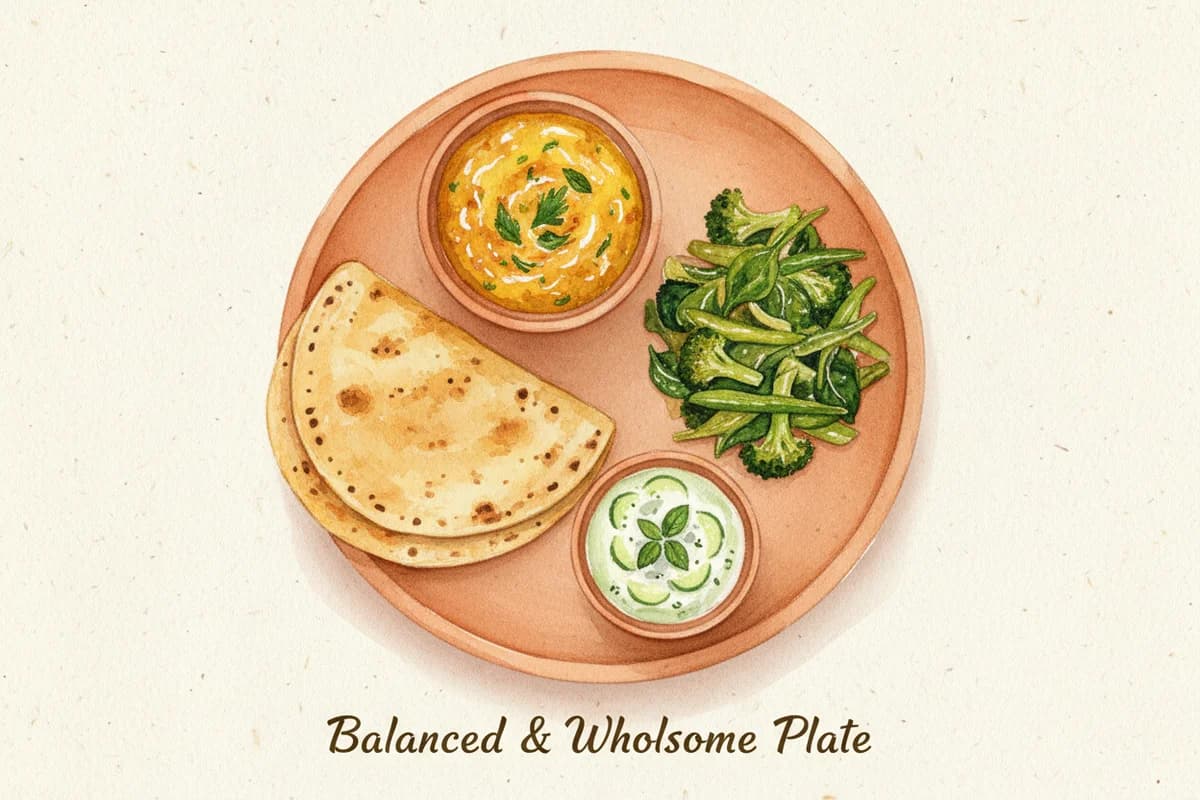
The single most impactful change you can make is not eliminating specific foods. It is restructuring the proportion of your plate.
The Diabetic-Friendly Indian Plate
- 50 percent non-starchy vegetables (sabzi, salad, raita)
- 25 percent protein (dal, paneer, egg, chicken, fish)
- 25 percent complex carbohydrate (1 roti or half cup rice)
- 1 to 2 teaspoons of healthy fat (ghee, mustard oil)
The Order of Eating Matters
Emerging research suggests that eating vegetables and protein before carbohydrates can significantly reduce postprandial glucose spikes. Start your meal with sabzi and dal, then eat your roti or rice. This simple reordering can reduce blood sugar peaks by 20 to 30 percent in some studies.
Sample Daily Meal Plans
Vegetarian Plan
Early morning (6:00 AM): Warm water with 1 teaspoon soaked fenugreek seeds (traditional remedy with research support for blood sugar [3]) Breakfast (8:00 AM): Moong dal chilla (2 pieces) with mint chutney and a small bowl of plain dahi. Or: vegetable upma made with millets and a side of sambhar. Mid-morning snack (10:30 AM): 10 almonds + 1 guava or 1 small apple Lunch (1:00 PM): 1 bajra or jowar roti + 1 bowl dal (any variety) + 1 large serving of sabzi (non-starchy) + small bowl of raita + salad with lemon Afternoon snack (4:00 PM): 1 cup buttermilk (chaas) with roasted cumin + 1 tablespoon roasted chana or makhana Dinner (7:30 PM): Half cup brown or parboiled rice + 1 bowl sambar or rasam + 1 serving palak paneer or bhindi sabzi + salad Bedtime (optional): 1 cup warm milk (unsweetened) with a pinch of turmeric and black pepper Approximate totals: 1,400 to 1,600 calories, 55 to 65 grams protein, 35+ grams fiber, moderate glycemic load.Non-Vegetarian Plan
Early morning (6:00 AM): Warm water with soaked fenugreek seeds or methi water Breakfast (8:00 AM): 2 egg bhurji (scrambled eggs with vegetables) + 1 whole wheat roti + mint chutney Mid-morning snack (10:30 AM): Handful of mixed nuts (almonds, walnuts) + 1 orange Lunch (1:00 PM): 1 ragi or bajra roti + 1 bowl dal + grilled chicken tikka (100 grams) or fish curry + large salad + small bowl dahi Afternoon snack (4:00 PM): 1 cup chaas + sprouted moong chaat Dinner (7:30 PM): Half cup basmati rice + fish curry or chicken stew + large serving of green vegetables + rasam Approximate totals: 1,500 to 1,700 calories, 75 to 85 grams protein, 30+ grams fiber, moderate glycemic load.Use our nutrition calculator to check the exact macros for any Indian dish, and our diet planner to generate a personalized weekly meal plan based on your caloric and glycemic targets.
Indian Spices That May Support Blood Sugar Management
Several spices commonly used in Indian cooking have research suggesting potential benefits for blood sugar. These should not replace medication, but they may offer modest additional support:
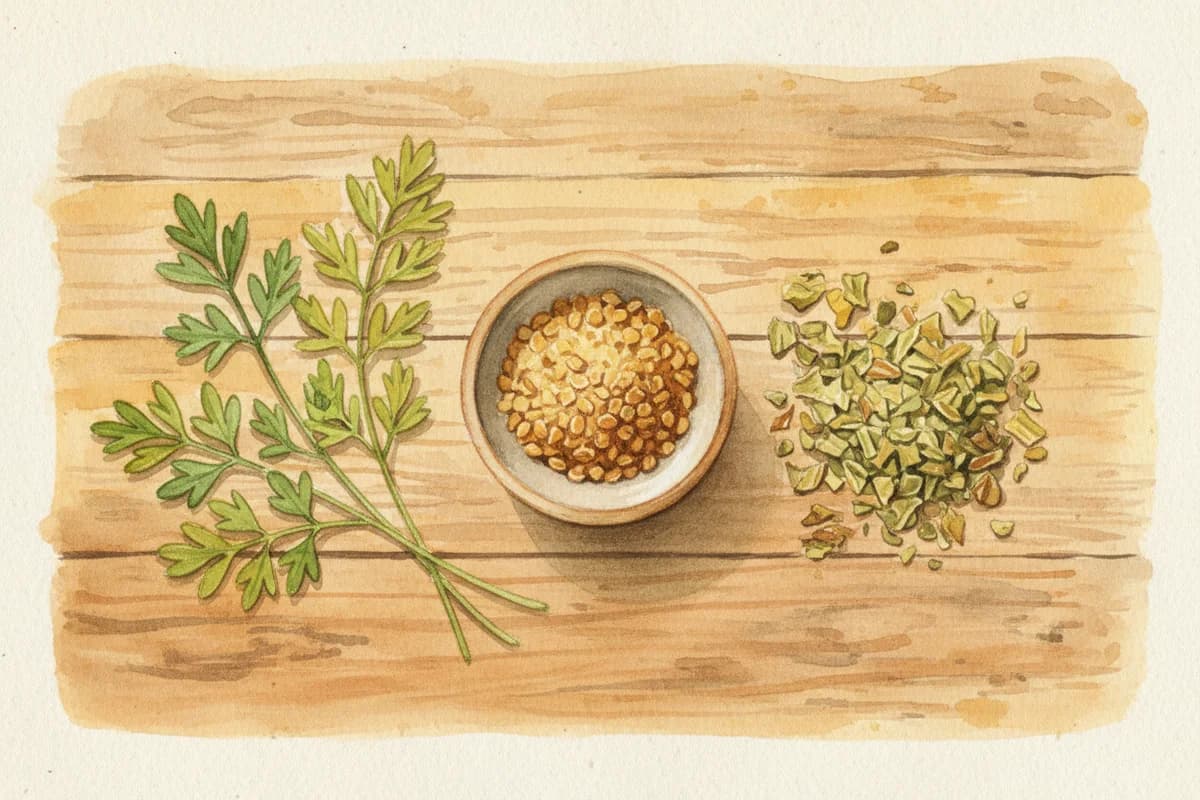
Fenugreek (methi). A meta-analysis of 10 clinical trials found significant reductions in fasting blood glucose with fenugreek supplementation [3]. Traditional practice of soaking seeds overnight and consuming in the morning has some research support. Cinnamon (dalchini). Some studies suggest that 1 to 6 grams of cinnamon daily may modestly reduce fasting glucose. Results are mixed, but the amounts used in Indian cooking are within this range. Turmeric (haldi). Curcumin may improve insulin sensitivity and reduce inflammatory markers associated with insulin resistance. Always combine with black pepper for absorption. Bitter gourd (karela). Contains compounds (charantin, polypeptide-p) that research suggests may have insulin-like effects. Some studies show modest blood sugar reductions, though the evidence is not as strong as for fenugreek. Jamun (Indian blackberry) seeds. Traditionally ground and consumed as a powder. Some preliminary studies suggest glucose-lowering effects, though more research is needed.The Consensus Guidelines for Asian Indians
The Indian Council of Medical Research and a panel of Indian diabetes experts published consensus dietary guidelines specifically for Asian Indians [4]. Key recommendations include:
- Total caloric intake should be individually determined based on weight, activity, and metabolic status
- Carbohydrates should comprise 50 to 60 percent of total calories, primarily from whole grains, millets, and legumes
- Protein intake of 0.8 to 1 gram per kilogram body weight per day
- Total fat not exceeding 20 to 25 percent of calories, with emphasis on monounsaturated and polyunsaturated fats
- Fiber intake of at least 25 grams per day (easily achievable with dal and vegetables)
- Limit sugar to less than 5 percent of total calories
- Physical activity of at least 30 minutes daily
Practical Daily Strategies
- Never eat carbohydrates alone. Always combine roti or rice with dal, vegetables, and fat. This is the single most effective strategy.
- Switch your grains gradually. Replace white rice with parboiled or brown rice. Replace wheat roti with bajra or jowar roti for 2 to 3 meals per week.
- Front-load protein and vegetables. Start every meal with dal, sabzi, or salad before eating roti or rice.
- Monitor portions, not just food types. Even healthy foods in excess raise blood sugar. Two rotis, not four. Half cup rice, not a full plate.
- Walk after meals. A 15-minute walk after lunch and dinner can reduce postprandial glucose by 30 percent or more. This is one of the most effective non-dietary interventions.
- Replace chai sugar gradually. Reduce sugar by half a teaspoon every week until you can drink unsweetened chai or chai with a small amount of stevia.
- Stock diabetic-friendly snacks. Roasted chana, makhana, nuts, buttermilk, and sliced vegetables with hummus. Remove biscuits and namkeen from the house.
- Use our meal analyzer to build diabetic-friendly thalis and check combined glycemic loads before you cook.
The Bottom Line
Managing diabetes with Indian food is not about abandoning your cuisine. It is about returning to the principles that made traditional Indian food one of the healthiest dietary patterns in the world: dal at every meal, diverse vegetables, whole grains, fermented foods, and strategic spicing.
The glycemic index chart above gives you specific data to make informed choices. The meal plans provide a practical template. And the research consistently shows that these traditional patterns, not Western keto diets or eliminating carbohydrates entirely, are the sustainable foundation for blood sugar management in the Indian context.
Work with your healthcare team. Monitor your blood sugar. And trust that the food traditions of your ancestors, calibrated and applied with modern knowledge, can be a powerful tool in managing this condition.
Sources and References
- [1] Mohan V, Radhika G, Sathya RM, Tamil SR, Ganesan A, Sudha V. “Effect of brown rice, white rice, and brown rice with legumes on blood glucose and insulin responses in overweight Asian Indians: a randomized controlled trial.” Diabetes Technology and Therapeutics, 2014. View source
- [2] Sievenpiper JL, Kendall CW, Esfahani A, Wong JM, Carleton AJ, Jiang HY, Bazinet RP, Vidgen E, Jenkins DJ. “Effect of non-oil-seed pulses on glycaemic control: a systematic review and meta-analysis of randomised controlled trials.” Diabetologia, 2009. View source
- [3] Neelakantan N, Narayanan M, de Souza RJ, van Dam RM. “Effect of fenugreek (Trigonella foenum-graecum L.) intake on glycemia: a meta-analysis of clinical trials.” Nutrition Journal, 2014. View source
- [4] Misra A, Sharma R, Gulati S, Joshi SR, Sharma V, Ibrahim A, Joshi S, Laxmaiah A, Kurpad A, Raj RK, Mohan V. “Consensus dietary guidelines for healthy living and prevention of obesity, the metabolic syndrome, diabetes, and related disorders in Asian Indians.” Diabetes Technology and Therapeutics, 2011. View source
- [5] Anjana RM, Deepa M, Pradeepa R, Mahanta J, Narain K, Das HK, Adhikari P, Rao PV, Saboo B, Kumar A, Bhansali A, John M, Tripathy JP, Mohan V. “Prevalence of diabetes and prediabetes in 15 states of India: results from the ICMR-INDIAB population-based cross-sectional study.” Lancet Diabetes and Endocrinology, 2017. View source
Medical Disclaimer
This content is for educational purposes only. It is not medical advice, diagnosis, or treatment. Consult your doctor or registered dietitian before making dietary changes, especially if you have a medical condition or are taking medication.
If you have diabetes, work with your healthcare provider to develop a diet plan that is right for you. The information below summarizes published research but is not a substitute for personalized medical guidance.
Related Recipes
More on Nutrition
Get Weekly Nutrition Insights
Evidence-based articles on Indian food and health, delivered to your inbox. No spam, no fads, just science.