Can Turmeric Really Reduce Inflammation?
Medical Disclaimer
This content is for educational purposes only. It is not medical advice, diagnosis, or treatment. Consult your doctor or registered dietitian before making dietary changes, especially if you have a medical condition or are taking medication.
In This Article
The Most Overhyped and Underhyped Spice Simultaneously
Turmeric occupies a strange position in the nutrition world. The wellness industry treats it as a cure-all, slapping "anti-inflammatory" on golden lattes, turmeric gummies, and curcumin capsules. Meanwhile, skeptics dismiss the entire body of research as hype.
The truth, as usual, is somewhere in between. And it is more interesting than either extreme.
Can turmeric reduce inflammation? The answer is: it depends on what kind of inflammation, what dose, what form, and what you mean by "reduce."
First, Define "Inflammation"
The word "inflammation" has become so overused in wellness marketing that it has nearly lost its meaning. So let us be precise.
Acute Inflammation
This is your body's immediate response to injury or infection. You cut your finger, it swells, turns red, and hurts. White blood cells rush to the area. This is healthy, necessary, and not something you want to suppress.
Turmeric is not particularly useful for acute inflammation, and suppressing it would generally be counterproductive.
Chronic Low-Grade Inflammation
This is a different phenomenon entirely. It is a persistent, low-level activation of the immune system that is not responding to a specific injury. It is measured by biomarkers like C-reactive protein (CRP), tumor necrosis factor-alpha (TNF-alpha), and interleukin-6 (IL-6).
Chronic inflammation is implicated in heart disease, type 2 diabetes, cancer, Alzheimer disease, arthritis, and depression. It is often called "the silent killer" because it produces no obvious symptoms until it contributes to a disease.
This is the type of inflammation that curcumin research addresses. When we ask "can turmeric reduce inflammation?" we are really asking: can curcumin lower these chronic inflammatory biomarkers?What the Clinical Trials Show
The CRP Evidence
C-reactive protein is one of the most commonly measured markers of systemic inflammation. A 2019 meta-analysis of randomized controlled trials found that curcumin supplementation significantly reduced CRP levels [3]. The analysis included 12 studies and found a pooled reduction that was statistically significant.
The effect was most pronounced in studies where participants had elevated CRP at baseline, meaning curcumin appeared to help most when inflammation was already present.
The TNF-Alpha Evidence
Tumor necrosis factor-alpha is a key inflammatory cytokine. A 2016 systematic review and meta-analysis by Sahebkar and colleagues examined eight randomized controlled trials and found that curcumin supplementation significantly reduced circulating TNF-alpha levels [2].
The researchers noted that the effect was dose-dependent: higher doses of curcumin produced larger reductions in TNF-alpha.
The Arthritis Evidence
The most clinically practical evidence for curcumin and inflammation comes from arthritis research. A 2016 meta-analysis of eight randomized controlled trials found that curcumin extracts (typically 1,000 milligrams per day) significantly reduced pain and improved physical function in patients with osteoarthritis and rheumatoid arthritis [5].
Several studies compared curcumin directly to NSAIDs (like ibuprofen) and found comparable pain reduction with fewer side effects. This does not mean curcumin replaces NSAIDs for everyone, but it suggests a meaningful anti-inflammatory effect in a clinical context.
The Molecular Mechanism
At the molecular level, curcumin's anti-inflammatory effects are well characterized. Curcumin inhibits NF-kB, a transcription factor that acts as a master switch for inflammatory gene expression. It also modulates multiple inflammatory signaling pathways, including COX-2, LOX, and iNOS [1].
This is not speculative. The molecular mechanisms are documented across hundreds of studies. The question is not whether curcumin has anti-inflammatory properties. The question is whether the amounts you get from food or supplements produce clinically meaningful effects in humans.
The Myth Part: Where Claims Go Too Far
"A Teaspoon of Turmeric Will Fix Your Inflammation"
This is the most common overclaim. A teaspoon of turmeric contains approximately 90 to 100 milligrams of curcumin. Most clinical trials showing significant anti-inflammatory effects use 500 to 2,000 milligrams of concentrated curcumin extract per day, which is 5 to 20 times more than you get from cooking.
Dietary turmeric contributes to your anti-inflammatory intake, but it is not equivalent to clinical supplementation doses. This distinction is important and is often lost in wellness marketing.
"Turmeric Is As Effective As Medication"
Some studies show comparable effects to NSAIDs for arthritis pain. But curcumin has not been shown to be equivalent to corticosteroids, biological agents, or disease-modifying medications for serious inflammatory conditions. Do not stop prescribed anti-inflammatory medications in favor of turmeric without discussing it with your doctor.
"Golden Milk Is Medicine"
A warm cup of haldi doodh (turmeric milk) is comforting, contains some bioactive compounds, and is part of a rich cultural tradition. But the amount of curcumin in a typical golden milk preparation is small. Calling it "medicine" sets expectations that the dose cannot deliver.
The PAINS Concern
A controversial 2017 paper in the Journal of Medicinal Chemistry by Nelson and colleagues raised an important methodological concern [4]. They pointed out that curcumin is a "pan-assay interference compound" (PAINS), meaning it may produce false positive results in certain types of laboratory assays. This does not invalidate all curcumin research, but it suggests that some in vitro (test tube) studies may overestimate curcumin's effects.
The authors specifically noted that this concern applies to laboratory assays, not to clinical trials measuring biomarkers in human blood. The human trials showing reductions in CRP and TNF-alpha are not affected by the PAINS issue because they measure actual biological outcomes, not assay artifacts.
The Fact Part: What Is Genuinely Supported
Curcumin has real anti-inflammatory effects in humans at supplemental doses
Multiple meta-analyses of randomized controlled trials confirm that 500 to 2,000 milligrams of curcumin per day significantly reduces inflammatory biomarkers. This is not contested by serious researchers.
The effects are dose-dependent
More curcumin generally produces larger effects. This means dietary turmeric provides some benefit, but less than supplemental doses.
Bioavailability determines effectiveness
As we detail in our black pepper and bioavailability article, curcumin is poorly absorbed on its own. Pairing turmeric with black pepper (which increases absorption by 2,000 percent) and fat (curcumin is fat-soluble) dramatically improves effectiveness. Indian cooking does both of these things by default.
Arthritis is the best-supported clinical application
The evidence for curcumin's effects on joint pain and arthritis symptoms is the most robust and clinically relevant.
Consistent dietary use matters more than occasional large doses
The anti-inflammatory benefits appear to come from regular, sustained consumption over time, not from occasional use. This aligns with the Indian pattern of using turmeric in virtually every meal.
What This Means for Your Kitchen
The practical takeaway is more nuanced than "turmeric cures inflammation" or "turmeric is useless":
- Use turmeric daily in your cooking. The amount in a typical Indian meal is modest, but daily consumption over years provides consistent, low-level anti-inflammatory input. This is the traditional Indian approach, and the epidemiological data supports it.
- Always combine with black pepper. This is non-negotiable if you want meaningful curcumin absorption. Even 2 to 3 cracks of fresh pepper dramatically improve bioavailability. See our detailed article on why.
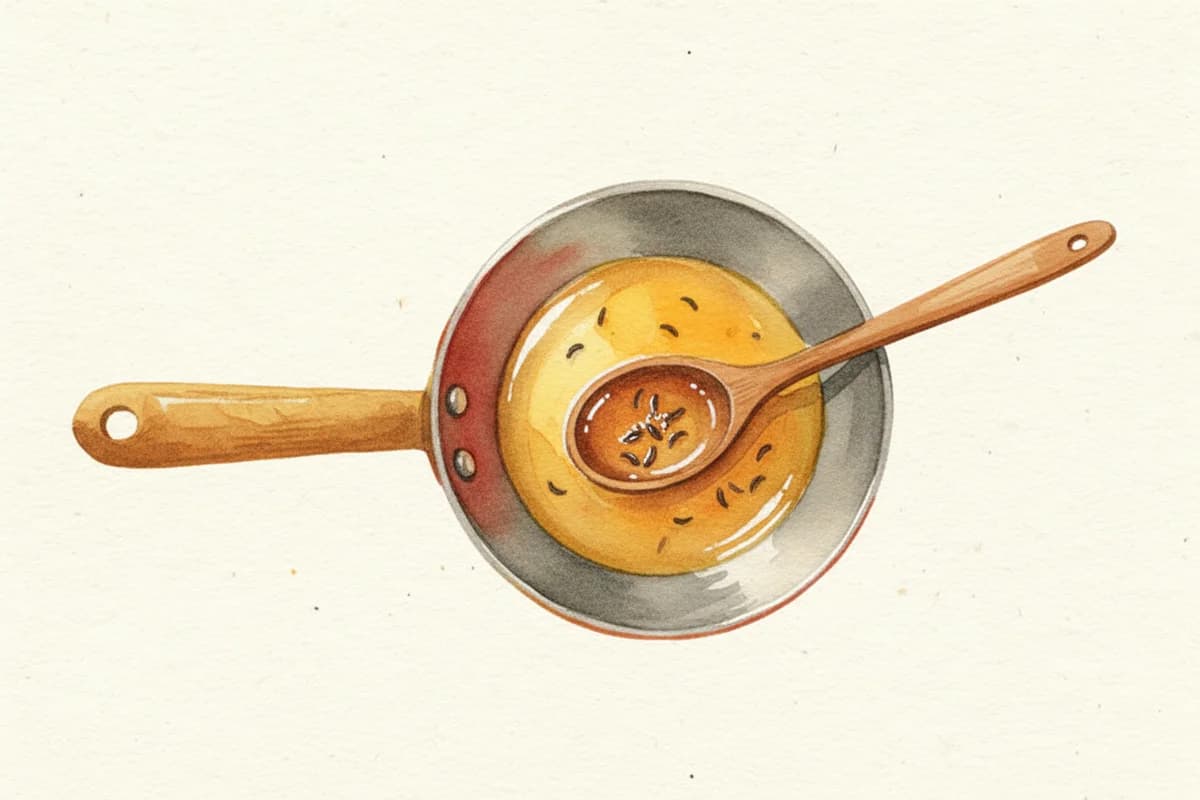
- Cook turmeric in fat. Add it to your tadka in hot ghee or oil. This is the traditional method and it optimizes curcumin absorption.
- Do not rely on turmeric alone for serious inflammatory conditions. If you have rheumatoid arthritis, inflammatory bowel disease, or other serious conditions, turmeric may be a helpful adjunct but is not a replacement for medical treatment.
- Consider supplementation for specific conditions, with medical guidance. If you have osteoarthritis or elevated inflammatory markers, discuss curcumin supplementation (500 to 1,000 milligrams, with piperine or enhanced absorption formulation) with your doctor.
- Be skeptical of miracle claims. Any product that claims turmeric "cures" inflammation, cancer, or Alzheimer disease is overstating the evidence. The correct language is "may help reduce," "research suggests," and "shows promise."
The Bottom Line
Can turmeric reduce inflammation? Yes, with qualifications.
At supplemental doses (500 to 2,000 milligrams of curcumin), the evidence from randomized controlled trials is solid. Multiple meta-analyses confirm significant reductions in inflammatory biomarkers like CRP and TNF-alpha. The arthritis evidence is particularly strong.
At dietary doses (a teaspoon of turmeric in your daily cooking), the effect is more modest but not zero, especially when combined with black pepper and fat, as Indian cooking traditionally does. Daily, sustained use over years is the pattern most likely to produce meaningful cumulative benefit.
The myth is not that turmeric reduces inflammation. The myth is that a single golden latte will transform your health. The reality is that turmeric, used consistently in a traditional cooking context alongside other anti-inflammatory foods and lifestyle practices, may contribute meaningfully to reducing chronic inflammation over time.
That is less exciting than a miracle cure. It is also closer to the truth. And it is exactly what your grandmother's kitchen has been doing all along.
Sources and References
- [1] Hewlings SJ, Kalman DS. “Curcumin: A Review of Its Effects on Human Health.” Foods, 2017. View source
- [2] Sahebkar A, Cicero AFG, Simental-Mendia LE, Aggarwal BB, Gupta SC. “Curcumin downregulates human tumor necrosis factor-alpha levels: A systematic review and meta-analysis of randomized controlled trials.” Pharmacological Research, 2016. View source
- [3] Tabrizi R, Vakili S, Akbari M, Mirhosseini N, Lankarani KB, Rahimi M, Mobini M, Jafarnejad S, Vahedpoor Z, Asemi Z. “The effects of curcumin-containing supplements on biomarkers of inflammation and oxidative stress: A systematic review and meta-analysis of randomized controlled trials.” Phytotherapy Research, 2019. View source
- [4] Nelson KM, Dahlin JL, Bisson J, Graham J, Pauli GF, Walters MA. “The Essential Medicinal Chemistry of Curcumin.” Journal of Medicinal Chemistry, 2017. View source
- [5] Daily JW, Yang M, Park S. “Efficacy of Turmeric Extracts and Curcumin for Alleviating the Symptoms of Joint Arthritis: A Systematic Review and Meta-Analysis.” Journal of Medicinal Food, 2016. View source
Medical Disclaimer
This content is for educational purposes only. It is not medical advice, diagnosis, or treatment. Consult your doctor or registered dietitian before making dietary changes, especially if you have a medical condition or are taking medication.
Related Recipes
More on Nutrition

Get Weekly Nutrition Insights
Evidence-based articles on Indian food and health, delivered to your inbox. No spam, no fads, just science.