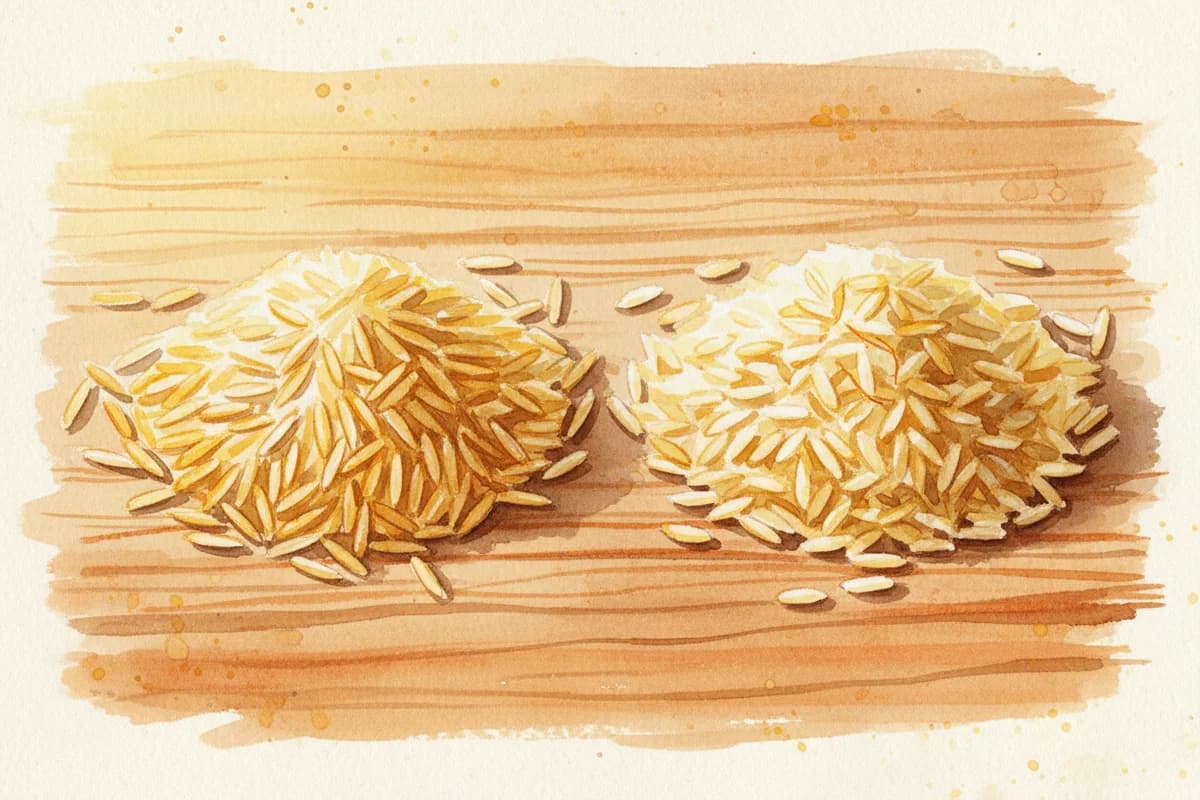
Basmati rice is not a commodity product where every brand tastes the same. The differences between a good basmati and a mediocre one are immediately obvious: the aroma when you open the pot, the length of each cooked grain, the texture on your tongue, and how well each grain stays separate rather than clumping into a sticky mass.
These differences matter most in dishes where rice is the centerpiece. A biryani with short, mushy grains is a fundamentally different eating experience than one with long, fragrant grains that separate cleanly with a fork. Even a simple bowl of steamed rice served alongside dal benefits enormously from using a quality basmati.
This ranking is based on testing each brand across three preparations: plain steamed rice, biryani, and pulao. We evaluated aroma, grain length after cooking, texture, separation, and value per pound.
What Makes Good Basmati Rice
Before the ranking, it helps to understand what separates premium basmati from the rest.
Aging: The best basmati is aged for 12 to 24 months before packaging. Aging reduces moisture content, which causes the grains to expand more during cooking and stay separate rather than sticking together. Aged rice also develops a stronger, nuttier aroma. Check the label for terms like "aged," "extra-long grain," or a specific aging duration. Grain length: Premium basmati grains measure 8mm or longer before cooking and elongate to 15mm or more after cooking. That elongation is a hallmark of genuine, well-aged basmati. If cooked grains do not stretch to nearly double their dry length, the rice is either not genuine basmati or has not been aged properly. Origin: Authentic basmati rice grows in the foothills of the Himalayas, primarily in the Indian states of Punjab, Haryana, Uttarakhand, and in Pakistan's Punjab province. The specific soil and climate conditions in these regions produce the distinctive aroma and grain characteristics that define true basmati. Aroma: The compound 2-acetyl-1-pyrroline gives basmati its signature scent, a fragrance often described as nutty, floral, or popcorn-like. The concentration of this compound varies significantly between brands and aging durations. You should smell the aroma the moment you lift the lid off your pot.1. Tilda Pure Basmati Rice
Best overall basmati for all usesTilda has been the benchmark for basmati quality outside of India for over 50 years. Their Pure Basmati is aged for a minimum of 12 months and sourced from farms in the Indian and Pakistani Himalayan foothills. The grains are among the longest you will find in any commercial brand, and they elongate dramatically during cooking.
The aroma is pronounced but not overpowering. Cooked grains are firm, separate, and hold their shape well through a second heating. This makes Tilda the best choice for biryani, where the rice needs to withstand layering and dum (covered) cooking without turning to mush.
For plain steamed rice, Tilda delivers consistent results regardless of whether you use a pot on the stove, a rice cooker, or a pressure cooker. The texture is fluffy without being dry.
Grain length: Extra-long (8.4mm dry) Aging: 12 months minimum Best for: Biryani, pulao, and everyday steamed rice Price: $$ (mid-range) Find it on Amazon2. Royal Basmati Rice
Best value for everyday cookingRoyal is the best-selling basmati rice brand in the United States, and for good reason. The quality-to-price ratio is unmatched. The grains are long, the aroma is solid, and the cooked texture is reliably fluffy and separate. It is not quite at the level of Tilda or specialty aged brands, but for everyday dal-chawal and weeknight meals, it performs well above its price point.
Royal sources from India and ages their rice before packaging, though they do not specify the exact duration. The 10-pound and 20-pound bags offer significant savings over smaller packages, making this the practical choice for families that cook rice 4 to 5 times per week.
The one area where Royal falls slightly behind premium brands is in biryani. The grains, while long, do not elongate as dramatically as Tilda or aged specialty brands. For biryani-specific use, consider upgrading to Tilda or India Gate Classic.
Grain length: Long (7.5mm dry) Aging: Not specified Best for: Everyday rice, dal-chawal, pulao Price: $ (budget-friendly) Find it on Amazon3. India Gate Classic Basmati Rice
Best for biryani specificallyIndia Gate Classic is aged for 24 months, which is double the standard aging period for most commercial brands. That extra aging produces noticeably longer cooked grains, stronger aroma, and a firmer texture that holds up beautifully under the demanding conditions of biryani preparation.
When you open a bag of India Gate Classic, the aroma is immediately apparent. The dry grains are visibly longer and thinner than most competitors. After cooking, each grain elongates to nearly 2.5 times its dry length and stays completely separate even when layered with rich, oily gravies.
India Gate is one of the most awarded basmati brands in India, and their Classic variant represents their premium tier. The price reflects that positioning, but for biryani, pulao, and any dish where rice is the star, the difference in quality justifies the cost.
Grain length: Extra-long (8.3mm dry) Aging: 24 months Best for: Biryani, saffron rice, special occasion cooking Price: $$$ (premium) Find it on Amazon4. Daawat Traditional Basmati Rice
Best aged rice at a mid-range priceDaawat Traditional is aged for 18 months and delivers performance that competes directly with India Gate Classic at a lower price point. The grains are long, the aroma is strong, and the cooked texture is firm and separate. It is an excellent choice for cooks who want aged-quality basmati without paying the premium price.
The consistency across bags is reliable, which matters when you are cooking rice daily and want predictable results with the same water ratio and cook time every time. Daawat does not surprise you with a bag that cooks differently from the last one.
This brand is widely available in Indian grocery stores across the US, UK, and Canada. If you cannot find it locally, the Amazon listing is competitively priced, especially in the larger bag sizes.
Grain length: Long to extra-long (8.0mm dry) Aging: 18 months Best for: All-purpose, strong value for aged quality Price: $$ (mid-range) Find it on Amazon5. Lundberg California White Basmati
Best domestically grown basmatiLundberg is the only US-grown basmati on this list. Based in California, Lundberg grows their basmati in the Sacramento Valley using sustainable farming practices. The rice is certified organic and non-GMO verified, which matters to health-conscious buyers.
The grain is shorter than imported Indian basmati, and the aroma is milder. It does not elongate as dramatically during cooking. However, the texture is clean and fluffy, and the taste is pleasant with a subtle nuttiness that works well in everyday preparations.
Where Lundberg excels is in consistency and food safety. Domestic rice undergoes strict USDA testing for heavy metals and contaminants. If arsenic levels in imported rice concern you, Lundberg provides a transparent, tested alternative.
For biryani and traditional Indian dishes where grain length and aroma are critical, imported basmati is still superior. For weeknight rice alongside dal and sabzi, Lundberg does the job cleanly.
Grain length: Long (7.0mm dry) Aging: Not specified Best for: Health-conscious cooks, organic preference, everyday rice Price: $$ (mid-range) Find it on Amazon6. Kohinoor Super Silver Basmati Rice
Best for pulao and flavored rice dishesKohinoor Super Silver occupies the sweet spot between everyday and premium. The grains are long enough for biryani but priced reasonably enough for daily use. The aroma is in the mid-range: present and pleasant but not as intense as India Gate Classic or heavily aged varieties.
What makes Kohinoor stand out for pulao specifically is the way the grains absorb flavors. The texture after cooking is firm but not stiff, with enough porosity to soak up the spiced broth of a vegetable pulao or a jeera rice without becoming soggy. The grains hold their shape through stirring and mixing, which is essential for pulao where the rice is cooked directly in the flavored liquid.
Kohinoor is one of the oldest basmati brands in India, established in 1886. Their quality control is reliable, and the brand is widely available in Indian grocery stores.
Grain length: Long (7.8mm dry) Aging: 12 months Best for: Pulao, jeera rice, flavored rice dishes Price: $$ (mid-range) Find it on Amazon7. Pride of India Extra-Long Indian Basmati
Best for Amazon-only shoppersPride of India is an Amazon-first brand that offers genuine extra-long basmati at competitive prices with Prime shipping. The rice is sourced from India and aged before packaging. Grain quality is solid: long, aromatic, and reliably separate after cooking.
The convenience factor is the main selling point. If you do not have access to an Indian grocery store and want quality basmati delivered to your door, this is the easiest option. The resealable packaging in smaller quantities (1.5-pound and 3.3-pound bags) is useful for cooks who do not use rice every day and want to keep the remaining supply fresh.
The per-pound cost is higher than Indian grocery store brands when you compare bulk pricing. But for single-household use and convenience-first shoppers, the premium is modest.
Grain length: Extra-long (8.0mm dry) Aging: Aged (duration not specified) Best for: Online shoppers without Indian grocery access Price: $$ to $$$ (convenience premium) Find it on Amazon8. Lal Qilla Traditional Basmati Rice
Best budget aged basmati from Indian grocery storesLal Qilla Traditional is aged for 12 months and delivers excellent value when purchased from Indian grocery stores. The grain length, aroma, and cooked texture are competitive with brands costing 30 to 40 percent more. It is the brand many Indian families buy in 10-pound or 20-pound bags for everyday cooking without sacrificing quality for price.
The aroma sits in the medium range: noticeable when the pot opens but not as powerful as 24-month aged varieties. Cooked grains are long, separate, and fluffy. For plain rice and simple pulaos, Lal Qilla performs at a level that makes upgrading to premium brands unnecessary for daily meals.
Availability is the main limitation. Lal Qilla is widely stocked in Indian grocery stores but harder to find on Amazon at competitive prices. If you have access to an Indian market, walk in and look for the distinctive red packaging.
Grain length: Long (7.8mm dry) Aging: 12 months Best for: Daily cooking at Indian grocery store prices Price: $ (budget-friendly) Find it on AmazonQuick Comparison
| Brand | Grain Length | Aging | Best For | Price |
|---|---|---|---|---|
| Tilda Pure | Extra-long | 12 months | Best overall | $$ |
| Royal | Long | Not specified | Best value everyday | $ |
| India Gate Classic | Extra-long | 24 months | Biryani | $$$ |
| Daawat Traditional | Long to extra-long | 18 months | Aged quality at mid price | $$ |
| Lundberg California | Long | Not specified | Organic, US-grown | $$ |
| Kohinoor Super Silver | Long | 12 months | Pulao and flavored rice | $$ |
| Pride of India | Extra-long | Aged | Amazon convenience | $$ to $$$ |
| Lal Qilla Traditional | Long | 12 months | Indian grocery value | $ |
How to Cook Perfect Basmati Rice
Regardless of which brand you choose, these steps produce the best results:
Rinse thoroughly. Place the rice in a large bowl and cover with cold water. Swirl gently with your hand, then drain. Repeat 3 to 4 times until the water runs mostly clear. Rinsing removes surface starch, which prevents the cooked grains from sticking together. Soak for 20 to 30 minutes. Soaking allows the grains to absorb water gradually, which promotes even cooking and maximum elongation. This step is especially important for biryani and pulao. For everyday steamed rice, you can skip soaking, but the results will be slightly better if you include it. Use the right water ratio. For rinsed and soaked basmati, use a 1:1.25 ratio (1 cup rice to 1.25 cups water). For unsoaked rice, increase to 1:1.5. These ratios produce firm, separate grains. If you prefer slightly softer rice, add an extra 2 tablespoons of water per cup of rice. Do not stir during cooking. Once you add the rice to boiling water and reduce the heat, cover the pot and do not remove the lid for 12 to 15 minutes. Stirring breaks the grains and releases starch, leading to sticky, clumpy rice. Rest for 5 minutes. After turning off the heat, let the pot sit covered for 5 minutes. This allows the residual steam to finish cooking the grains evenly. Then fluff gently with a fork, not a spoon.Our Recommendation
For everyday cooking, buy Royal Basmati in a 10-pound or 20-pound bag. The value is exceptional, and the quality handles everything from plain rice to quick pulaos without complaint.
For biryani and special occasions, invest in India Gate Classic or Tilda Pure. The aged grains produce visibly longer, more aromatic rice that makes a real difference in dishes where rice is the star. Keep a smaller bag of premium rice alongside your everyday supply.
If you shop exclusively online and do not have an Indian grocery store nearby, Tilda Pure on Amazon is the most reliable premium option, and Royal is the best value option. Both ship well and maintain their quality in the sealed packaging.